What Features Should an IoT Solution for Thai Factories Have?
In an era where Industry 4.0 and Digital Transformation have become essential for survival, many factory owners in Thailand may feel that these technologies are complex and require massive budgets. However, the heart of the industrial revolution in the digital age isn’t about installing the most advanced technology; it’s about choosing the “right” IoT Solution that solves real problems and fits your factory’s specific context.
What exactly does a high-quality IoT solution for Thai factories look like? Solwer explores the essential features to consider when choosing tools to upgrade your production process and increase competitiveness. Selecting the right solution is the first and most critical step in leading your factory into the Industry 4.0 era sustainably. Before we dive into the features, let’s define: What is IoT?
What is IoT? When "Things" Start Talking via the Internet
IoT stands for the Internet of Things. It refers to the concept where devices, machinery, or sensors are made “smart” by connecting them to the internet. This allows them to collect data from the physical environment—such as temperature or operational status—and send it to a “brain” (Cloud or Server) for processing and analysis.
In a factory setting, this means making ordinary machines “talk.” They can report their status in real-time: “I’m running,” “I’m down,” or “My temperature is too high.” This data is the heartbeat of a Smart Factory.
7 Must-Have Features for a Factory IoT Solution
1.Versatile Connectivity
A good solution must connect to all types of machines, especially through Retrofitting. This allows you to add sensors to legacy machines without replacing the entire unit.
2.User-Friendly Interface
The system should be designed for floor staff, not just IT experts. It must feature an intuitive interface and support the Thai language.
3. Real-time Visualization:
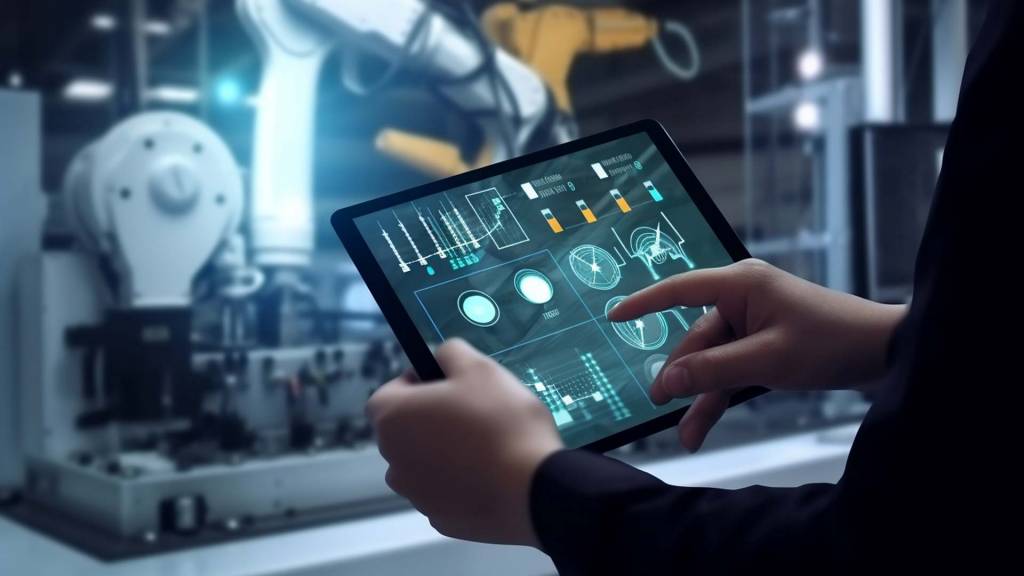
The core value of an IoT solution is the ability to provide instant visibility into current operations. A high-quality system must feature a Real-time Dashboard that displays critical production data, such as:
Machine Status Monitoring: Visualize individual machine health using an Andon System (e.g., Green for Running, Red for Downtime, and Yellow for Setup/Standby).
Production Output Tracking: Automatically count actual units produced versus hourly or daily targets to ensure the schedule is on track.
Instant Alerts & Notifications: Send immediate Alerts to supervisors or maintenance teams via mobile or email when a machine stops longer than a predefined threshold, reducing response time significantly.
4.Scalability: Start Small, Grow Big
Most factories cannot afford to overhaul their entire system at once. An ideal IoT solution should be Modular, allowing you to “Start Small.” For instance, you can begin by implementing the system on just 1 or 2 bottleneck machines to prove the results and Return on Investment (ROI). Once the value is established, you can easily Scale Up to other machines or entire production lines in the future.
5. Actionable Analytics for Continuous Improvement
Data collection alone is useless if it doesn’t lead to improvement. A robust system should include built-in Data Analytics functions such as:
Downtime Root Cause Analysis: Rank the reasons why machines stop most frequently or for the longest durations.
Automated Reporting: Generate Pareto Charts to highlight the “Vital Few” problems—the 20% of causes responsible for 80% of the impact—allowing management to prioritize troubleshooting accurately.
Performance Metrics: Automatically calculate Key Performance Indicators (KPIs) like OEE (Overall Equipment Effectiveness) to provide a clear picture of total machine efficiency.
6. Cost-Effectiveness and Value
Price is a primary factor for Thai manufacturers. The best IoT solution doesn’t have to be the most expensive; it must provide a clear ROI. A Subscription-based model (Monthly/Yearly) is often a more attractive option than a large one-time capital expenditure, as it reduces initial financial risk and lowers the barrier to entry for Digital Transformation.
7. Dedicated Local Support
Having a support team that speaks Thai and understands the local industrial landscape is critical. Local Support ensures that you receive timely consultation, assistance with installation, staff training, and rapid troubleshooting. Exceptional after-sales service is the heart of a successful, long-term IoT implementation.
DENSO IoT Products: Unlocking Your Factory's Potential for the Digital Age
In modern factories filled with advanced machinery, robots, and sensors, data has become the heartbeat of efficiency. However, a major challenge many factories face is that these devices often come from various manufacturers and “speak different languages.” This makes collecting and analyzing data a complex and costly endeavor.
DENSO IoT Products are solutions specifically designed to break down these communication barriers. By transforming scattered data into powerful, actionable insights, they allow you to truly unlock the maximum potential of your production line.
The DENSO IoT Ecosystem: 3 Core Components Working in Harmony
The heart of this solution consists of three core elements that coordinate seamlessly, from data collection to visualization.
1. IoT Data Server (The Communication Hub)
Acting as the “brain” or central hub of the system, this high-stability Industrial Computer is designed to connect and communicate with a vast number of devices across the production line via wired or wireless connections. This single server integrates the capabilities of both IoT Data Share and IoT Data View, making it easy to install and ready for rapid deployment.
2. IoT Data Share (Data Collection & Management Software)
This intelligent software acts as a “data manager,” utilizing ORiN technology (explained below) to seamlessly connect and gather data from diverse automated equipment. Its primary role is to collect, process, and record all floor-level data in one centralized location without requiring the user to write complex new code.
3. IoT Data View (Dashboard Visualization Software)
This is the “Dashboard” interface for the user. It transforms complex raw data into easy-to-understand Visualizations, such as graphs, charts, and key metrics. Users can access this dashboard in real-time via standard web browsers (e.g., Google Chrome, Microsoft Edge) on any device—be it a computer, laptop, or Smart TV—without installing additional software.
The Technology Behind It: What is ORiN?
Imagine ORiN as a “Universal Translator” for factory machinery. Typically, robots, PLCs, or CNC machines from different brands have unique communication protocols, making integration difficult. ORiN, a standardized Middleware, acts as the communication intermediary. It enables DENSO’s IoT Data Share to “talk” to and retrieve data from equipment of any brand smoothly and uniformly.
Key Benefits of DENSO IoT Products
Unlock Maximum Machine Potential: Simultaneously collect and process deep insights from diverse devices (e.g., PLCs, Robots, Cameras), ensuring no critical data is missed.
Analyze Data Anytime, Anywhere: Access real-time factory-wide dashboards via web browsers, with the ability to retrieve historical data for in-depth trend analysis.
Drive Continuous Improvement: Use accurate, real-world data—from individual machine levels to the entire factory overview—to plan and improve production lines with precision and efficiency.
Now that we understand what IoT is, the essential features for Thai factories, and the power of DENSO IoT Products, let’s take a look at D-QITs, a concrete example of an IoT solution built specifically to solve factory challenges.
What is D-QITs? And How Does It Drive Continuous Improvement?
D-QITs (Dx Quick Kaizen Tools) is an application developed using IoT technology to directly support the concept of Kaizen in the industrial sector. The primary goal of D-QITs is to transform “Hidden Losses” and the “7+1 Wastes” that are often invisible into tangible, Real-time Data. This information is then presented through Visualizations that everyone in the organization can understand and use to improve work processes effectively.
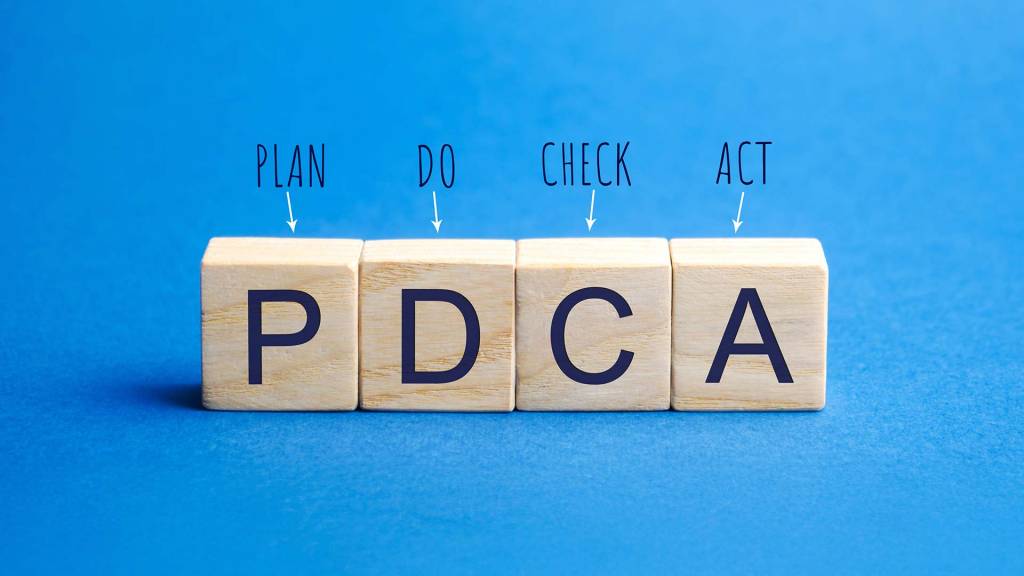
What makes D-QITs stand out is its role as an “Accelerator” for the Kaizen process, specifically driving the PDCA (Plan-Do-Check-Act) cycle—the heart of continuous improvement:
Plan: Accurate data from D-QITs allows teams to plan improvements based on real problems rather than guesswork.
Do: Teams implement the improvement plans as designed.
Check: D-QITs displays the results of changes instantly, allowing for an immediate comparison between old and new methods—a process significantly faster than traditional manual data collection.
Act: Use the results to establish new standards or restart the PDCA cycle for further development.
3 Essential Insights from D-QiTs: The Heart of the PDCA Cycle
To achieve true Kaizen results, improvements must be driven by real data from the shop floor (Genba). D-QiTs is designed as an IoT tool to automatically collect these three critical insights, empowering your PDCA cycle with clarity and impact.
1. Output Progress
What it is: The use of IoT sensors to count and track actual production volume in real-time, displayed as a live progress graph on the dashboard.
How it enhances PDCA: This is a vital tool for the Check phase. It allows teams to instantly verify if the work (Do) is meeting the target (Plan). If the graph dips, the team can Act immediately rather than waiting until the end of the shift.
Unlock: Real-time production visibility.
2. Cycle Time
What it is: Detailed and continuous measurement of the time taken at each station or step in the production process.
How it enhances PDCA: Cycle Time data provides deep insights during the Check phase to answer “Why is production down?” It identifies Bottlenecks or processes that are taking longer than usual, forming the basis for a new Plan to optimize workflows.
Unlock: Identifying hidden delays.
3. Abnormal Event VDO
What it is: An advanced feature where the IoT system automatically records a short video clip when it detects a Cycle Time that exceeds the set threshold.
How it enhances PDCA: Video serves as “Empirical Evidence” for the Check and Plan phases. It eliminates arguments between management and floor staff because everyone can see the actual event to analyze the Root Cause accurately.
Unlock: Fact-based root cause analysis.
In the past, one of the biggest challenges of Kaizen was the time-consuming and often inaccurate manual data collection at the Genba. With D-QITs, these processes become instant and precise.
D-QITs isn’t just a data collection tool; it is a comprehensive IoT Solution that bridges the gap between people, data, and decision-making. By shifting from “gut-feeling” decisions to a Data-Driven approach, your organization can build a sustainable competitive advantage in the Industry 4.0 era.
Take the next step toward a Smart Factory.