


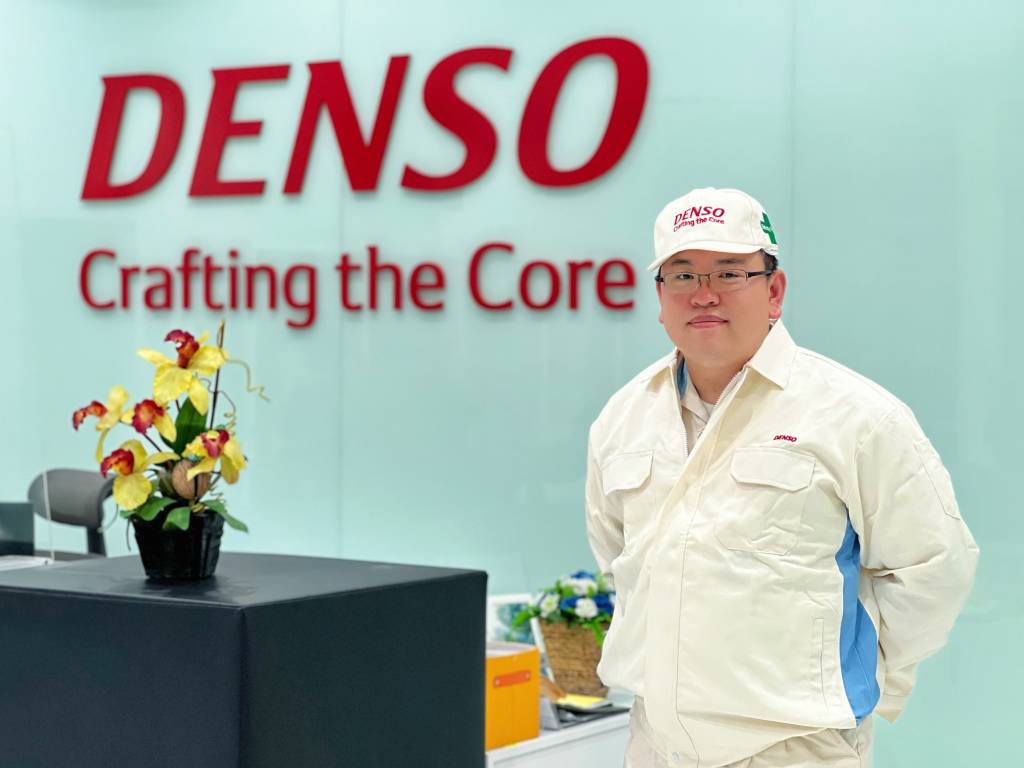
Inside the Factory Series: Lean Automation – Uniting People, Technology, and Kaizen
The driving force behind a global manufacturing leader like DENSO is not merely technology. It is powered by the seamless synergy of People, Processes, and Continuous Improvement (Kaizen). In this episode of the Inside the Factory Series, Somchai (Mink), GM of Lean Automation, shares profound insights into mastering this transformation, drawing from over 20 years of hands-on leadership directly on the shop floor.
From Engineer to Lean Automation Leader at a Global Manufacturing Powerhouse
You May Also Like

Equipped with an engineering background from Chulalongkorn, Mie (Japan), and Mahidol University, Somchai “Mink” Boonphoapichart began his career at DENSO as a Process Engineer. With over 20 years on the shop floor, he steadily advanced to General Manager of Lean Automation.
This extensive hands-on experience forged a profound understanding of both production complexities and the human element. For him, understanding the “heart of the workforce” is the true catalyst for revolutionizing a modern Smart Factory.
How DENSO Drives a Resilient Smart Factory
When asked about the key success factors in preparing people and the organization for the Smart Factory transition, the insight from K. Mink (P’Mink) did not begin with machinery or AI. Instead, it focused on two fundamental Core Philosophies
1. DENSO Kaizen
When asked about DENSO‘s success in preparing its workforce and operations for the Smart Factory, Somchai emphasizes that the transformation doesn’t start with advanced machinery or AI. Instead, it is anchored in two core principles.
2. DENSO HRD
At DENSO, people development is the core pillar. Human potential is recognized as the organization’s greatest asset. No matter how advanced the technology becomes, sustainable growth is impossible without a prepared and empowered workforce.
Lean Automation Must Always Be Human-Centric
Mink’s core philosophy is clear: Lean Automation begins with people, not machines.
Integrating technology into the shop floor isn’t about replacing the workforce. Its true purpose is to empower employees to work smarter, safer, and with greater efficiency. Prioritizing technology over the human element inevitably leads to unsustainable results, operational resistance, and ultimately, a failed transformation.
Technology is Never the Ultimate Answer Without a Lean
Integrating digital systems, Automation, or AI into processes riddled with Waste doesn’t solve problems—it simply accelerates them.
Mink emphasizes that if the shop floor is still plagued by redundancies, waiting times, rework, and miscommunication, even the most expensive technological investments will fail to unlock their true value. This is the decisive reason why Lean must always precede Digitalization.
The Modern Factory Must Remain Human-Centric
Moving away from high-pressure, output-obsessed environments, the true vision of Lean Automation transforms the shop floor into a space where:
- People operate with absolute confidence.
- Systems actively reduce operational burdens.
- Technology serves as an enabler, not a dictator.
When employees feel valued, safe, and empowered to grow, sustainable operational excellence is finally unlocked.
From the Shop Floor to the Digital Business Landscape
The Inside the Factory Series highlights a crucial reality: Lean is no longer confined to the manufacturing line. It has evolved into the universal language for every organization in the digital era. Whether a tech startup racing against time and capital, an e-commerce platform managing volatile demand, or a complex large-scale enterprise, all face the same operational bottlenecks. Every organization struggles with redundant tasks that drain human potential, process delays that erode business opportunities, and fragmented data that clouds decision-making. This is where Lean principles provide a decisive edge, unlocking unparalleled agility and empowering organizations to adapt swiftly, make razor-sharp decisions, and master continuous change.
Having explored the macro view of Lean Automation and the modern Smart Factory, we dive deeper with Mink. The following Q&A uncovers practical strategies, actionable insights, and hard-earned shop floor lessons ready to revolutionize your operations
Exclusive Q&A
1. What is the organization's core mission and current business overview?
Operating at the forefront of the automotive industry, our core mission is to revolutionize manufacturing efficiency. We achieve this by seamlessly integrating Lean principles with advanced Automation across our facilities and affiliated networks. Our ultimate goal is to unlock a decisive edge, elevating our competitiveness in both domestic and global markets.
2. What was the driving force behind adopting Lean and Automation?
The primary catalyst is the continuous escalation of labor costs in Thailand. Recognizing that fully replacing the workforce with automated systems overnight is neither practical nor feasible, Lean Automation emerged as the definitive strategy. This approach bridges the gap—empowering our people while systematically eliminating Waste—to unlock sustainable competitiveness and drive long-term operational excellence.
3. What were the primary challenges before initiating the transformation?
The fundamental hurdle was not the production process, but the organizational mindset. Initially, the workforce lacked visibility into future operational disruptions, resulting in a lack of urgency to actively engage in Kaizen initiatives. The true challenge lay in overcoming resistance and cultivating a proactive culture of change management.
4. How Are Lean and Automation Primarily Implemented?
We prioritize Lean Principles as our foundational strategy to architect solutions tailored for Frontline Operations. This human-centric approach empowers the workforce to achieve maximum efficiency and operational agility first. Automation is then strategically deployed as a secondary phase, rigorously evaluated against Return on Investment (ROI) to ensure optimized capital expenditure and a decisive edge for the business.
5. Are There Proven Success Stories with Tangible Results?
We have revolutionized multiple operations, achieving a >20% Increase in Production Capacity by leading with Lean Principles as our foundation. Furthermore, this strategic approach has successfully Reduced Automation Investment by Over 30% when compared to deploying technology without prior Lean optimization. This unequivocally proves that Lean is the master key to unlocking true Automation ROI and maximizing your capital efficiency.
6. How Is the Workforce Engaged in the Continuous Improvement Process?
Our operators play a pivotal role from the initial design phase, actively co-creating workflows that optimize Human-Machine Collaboration alongside tools, equipment, and robotics. This ensures every process is highly ergonomic and perfectly aligned with actual Shop Floor Realities. By empowering the workforce from day one, we unlock a profound Sense of Ownership, driving full commitment and ensuring seamless Change Management across the organization.
7. What Is Our Core Differentiator?
While our workforce initially mirrored typical organizations, experiencing the tangible benefits of operational optimization ignited a relentless drive for Continuous Improvement (Kaizen). Because our solutions directly enhance Workplace Ergonomics and simplify daily tasks, our operators actively champion change while simultaneously driving superior Business Performance. This empowered, bottom-up approach has organically evolved into a deeply ingrained Kaizen Culture that defines our decisive edge.
8. What Is Your Advice for Organizations Starting Their Lean and Automation Journey?
Initiating transformation inherently brings challenges. However, mastering Lean and Automation revolutionizes more than just your bottom line—it forges a resilient, Collaborative Culture dedicated to daily Continuous Improvement. While the initial phase may be demanding, leveraging expert guidance and the right technological tools guarantees sustainable momentum. This strategic partnership aligns your workforce, ensures seamless execution, and provides the Decisive Edge needed to achieve your shared vision.
9. What Is Our Core Vision for the Digital Factory Transition?
Our strategic vision is to achieve Maximum Output with Minimal Input. We are committed to continuously elevating workforce capabilities, firmly believing that human potential can transcend limits when empowered by the right continuous improvement processes. Therefore, a true Digital Factory powered by Lean Automation—particularly within the Asian manufacturing landscape—is not necessarily a 100% fully automated facility. Instead, it is about mastering seamless Human-Machine Collaboration, revolutionizing how people and technology synchronize to achieve ultimate operational excellence.
10. How Will the Workforce Role Evolve in the Smart Factory Era?
The workforce will transition from executing repetitive, manual tasks to mastering strategic roles in Data Analysis, Decision-Making, and Continuous Improvement. As Non-Value-Added (NVA) activities are seamlessly replaced by automation, human operators will be empowered and elevated to become the true Architects and Controllers of the Smart Factory ecosystem.
Ultimately, the insights from “The Factory Floor Series” and this interview unequivocally prove that Lean Automation is not a temporary technical fix—it is a complete structural revolution across People, Processes, and Culture. While technology accelerates execution, Lean Principles provide the firm foundation that empowers organizations to sustainably scale further. When human ingenuity, advanced machinery, and a relentless drive for improvement synchronize, you don’t just modernize your factory; you secure long-term, sustainable growth in an ever-evolving global market. Unlock more visionary insights like this on the Solwer Blog.

into Productivity
industrial experts.