


Loss Tracker: The Game-Changer to Elevate Thai SMEs Beyond Limits!
In an era of skyrocketing raw material costs and fierce competition, many SME entrepreneurs face a headache-inducing question: “Why are sales good, but there’s no profit left?”. This problem often doesn’t stem from poor sales, but from invisible “leaks” hidden in daily work processes. These leaks are “Hidden Losses” that gradually eat away at business profits without us ever knowing. Loss Tracker is the answer. Today, Solwer will dive deep into the problem and present a practical, effective solution using Loss Tracker.
Deep Dive into "Loss": Not Just "Waste"
You May Also Like
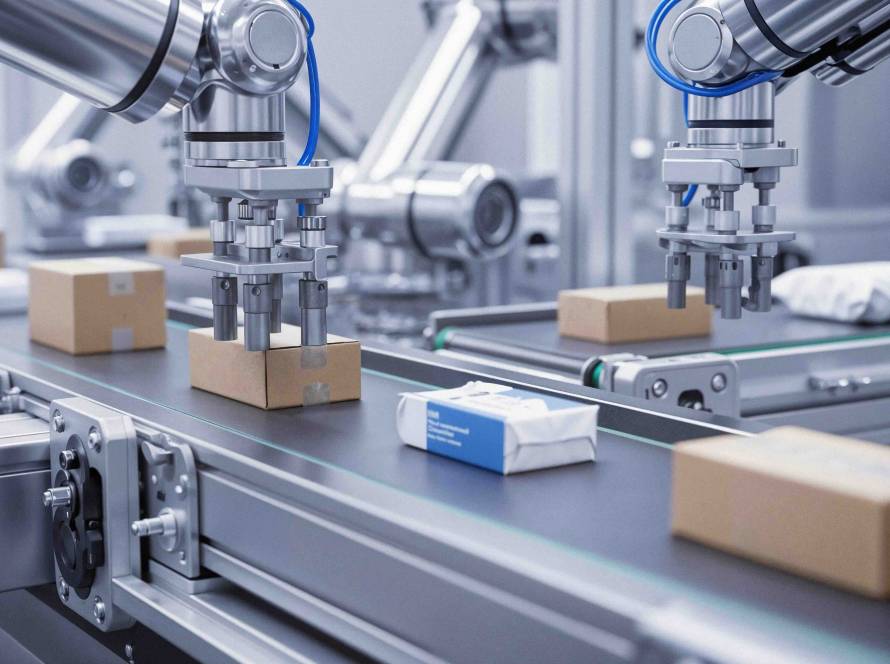

When talking about “loss” in business, especially for SMEs (Small and Medium-sized Enterprises), the first image that often comes to mind is tangible “waste,” such as defective products, spoiled raw materials, or scrap materials left over from production. While this understanding is correct, it is not comprehensive.
In reality, “Loss” is a much broader concept. It refers to every activity, resource, or time spent that does not generate “Value” in the eyes of the customer. Simply put, it is everything the customer doesn’t want to pay for, but your organization still incurs costs for. These losses are often invisible and hidden in daily routines, such as employees walking long distances to fetch tools, time spent searching for files on a computer, or even inventory sitting idle in stock. These are “Sunk Costs” that silently eat away at business profits.
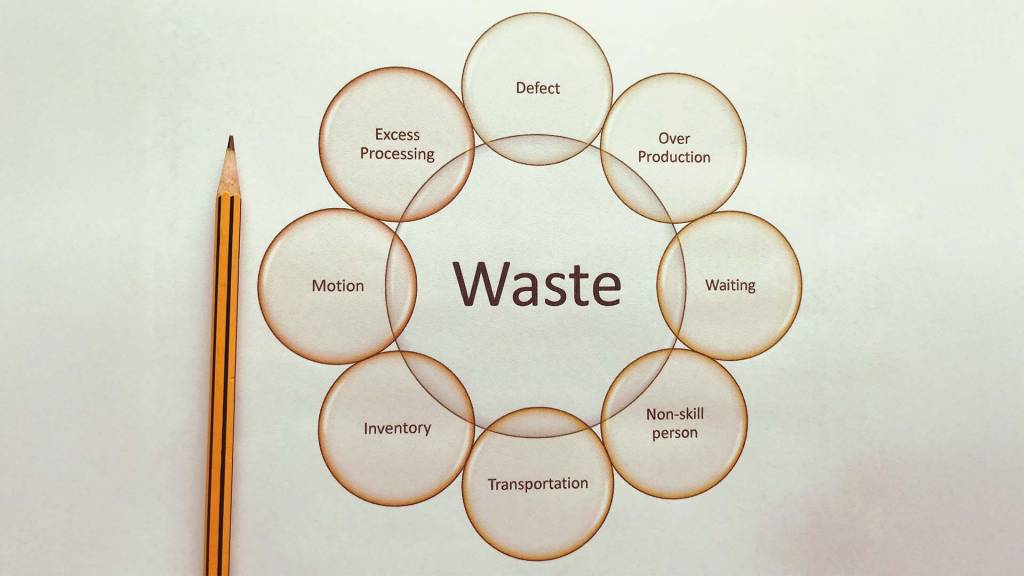
Lean Principles: The 7 Wastes Hidden in Business
This broader view of “loss” is rooted in the principles of Lean Manufacturing, a management system focused on eliminating waste (called “Muda” in Japanese) to maximize customer value. It classifies commonly overlooked wastes into 7+1 types as follows:
1. Overproduction
- What it is: Producing more products or services than customers order, or producing them faster than necessary. This is the most serious waste because it leads to other types of waste.
- SME Example: A bakery baking 100 loaves when they usually sell 70 a day, leading to leftovers, or a print shop printing many more extra copies than necessary.
Commonly Overlooked: Business owners often think of it as “producing just in case” or “being prepared,” but it is actually a cost sunk into materials, labor, and storage.
2. Excess Inventory
- What it is: Having more raw materials, work-in-progress, or finished goods in stock than necessary.
- SME Example: A retail store stocking a warehouse without good sales forecasting, causing tied-up capital, obsolete or deteriorated products, and wasted storage rent.
- Commonly Overlooked: Having a lot of stock feels “reassuring,” but excessive stock masks other problems like slow production processes or raw material quality issues.
3. Unnecessary Motion
- What it is: Unproductive employee movements, such as excessive walking, reaching, bending, or grasping.
- SME Example: In a restaurant, a chef has to walk back and forth to grab equipment placed in different corners, or an office worker has to get up to grab documents from a distant printer.
- Commonly Overlooked: We often think an employee “looking busy” means they are working efficiently, but unnecessary motion actually causes fatigue and wastes time.
4. Over-processing
- What it is: Working in steps that are more complex than necessary or doing more than the customer requires.
- SME Example: Creating reports that are too detailed for anyone to read, polishing a workpiece to a shine beyond customer standards, or redundant quality checks.
- Commonly Overlooked: Thinking that doing “the best” or “the most detailed” work is always good, but if it doesn’t add value for the customer, it is a cost.
5. Unnecessary Transport
- What it is: Moving raw materials, workpieces, or products from one place to another unnecessarily.
- SME Example: Poor factory or warehouse layouts that require moving materials long distances between production steps, risking damage and wasting time.
- Commonly Overlooked: Seeing transport as just a part of the job without calculating the time and labor costs lost to these movements.
6. Waiting
- What it is: Idle time caused by waiting for something, such as materials, machines, information, or approvals.
- SME Example: Production staff waiting for workpieces from the previous department, sales teams waiting for quotes from purchasing, or customers waiting too long for service.
- Commonly Overlooked: Waiting becomes so normal in company culture that no one sees it as a “loss” of time and opportunity.
7. Defects
- What it is: Producing sub-standard products or services that require correction, rework, or disposal. This is the most obvious waste.
- SME Example: Clothes sewn in the wrong size, food prepared with the wrong recipe, or providing incorrect customer information.
- Point of Concern: Although obvious, many SMEs lack a system to track where defects occur and their value, making it impossible to fix the root cause.

What is Hidden Loss?
When talking about the 7 Wastes, one cannot ignore Hidden Loss. Hidden Loss refers to the invisible financial impacts or costs resulting from the “7 Wastes” mentioned earlier.
If we compare visible “Defects” to the Tip of the Iceberg, Hidden Loss is the submerged part of the iceberg, which is vastly larger and a real danger to the business.
These losses are “hidden” because they don’t appear as clear expense items on balance sheets or profit and loss reports. Your company has no expense account named “Time Lost Waiting” or “Cost of Employees Walking Too Far,” but these are costs embedded in work processes, eating away at efficiency and reducing your profits every day.
The Link Between 7 Wastes and Hidden Loss
“Waste” is the unproductive activity, while “Hidden Loss” is the cost resulting from that activity. Here are some clearer examples:
1. Waiting
Resulting Hidden Loss:
- Opportunity Cost: Time staff or machines spend waiting is not used to generate revenue or value-added products.
- Wasted Labor Cost: You are still paying wages to employees while they are standing around waiting.
2. Excess Inventory
Resulting Hidden Loss:
- Sunk Cost: Company capital is tied up in stock instead of being used for investment or cash flow elsewhere.
- Storage Cost: Incurring unnecessary costs for storing items.
- Depreciation & Obsolescence: Products may expire, get damaged, or become outdated.
3. Unnecessary Motion
Resulting Hidden Loss:
- Reduced Efficiency: Employees take longer to finish one piece, resulting in less work being produced in a day.
- Employee Fatigue & Morale: Working in a cramped or inconvenient environment makes employees tired and discouraged, potentially leading to more errors.
4.Overproduction
Resulting Hidden Loss:
- This is the most serious waste because it creates every form of Hidden Loss, from stock costs and excess transport to labor costs for items that aren’t yet sold.
Why Must SMEs Pay Attention to Hidden Loss?
Understanding Hidden Loss shifts the focus from solving the “symptom” (like managing existing defects) to solving the “root cause” (eliminating activities that cause waste).
For SMEs with limited resources, reducing Hidden Loss is like discovering hidden profit without even having to increase sales or find new customers. Just by improving work processes to eliminate the 7+1 wastes, you can reduce these invisible costs and turn them into real profit. Therefore, seeing and managing Hidden Loss is key to transforming an SME from just “surviving” to “sustainable growth”.
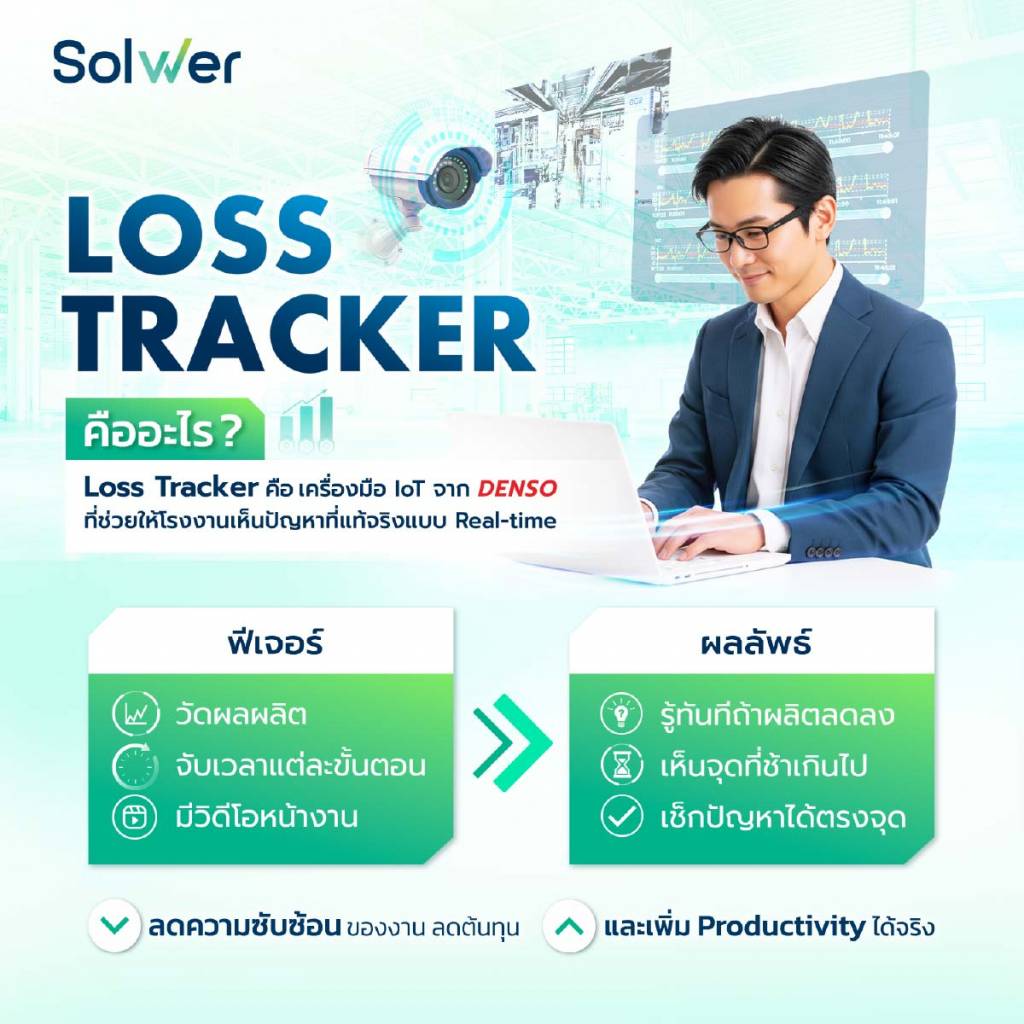
What is Loss Tracker?
SME business profit doesn’t depend on sales alone, but also on controlling “Hidden Loss” or invisible costs that eat away at your business every day.
DENSO Loss Tracker is an intelligent IoT (Internet of Things) system in the D-QITs series designed to change invisible “Time Loss” in production into visible and measurable data. The goal is to help factories and businesses identify and fix problems causing production interruptions precisely. This system solves the classic factory problem of knowing “the machine stopped” but not knowing “why it stopped,” “how long it stopped,” and “which problem to fix first”.

into Productivity
industrial experts.
How Loss Tracker Works
Loss Tracker is easy to use and doesn’t require complex installation:
- Install QR Code: Place a QR code with specific machine information on each machine or workstation.
- Scan When a Problem Occurs: When a machine stops or a problem arises, the responsible employee immediately scans the QR code on the machine with a tablet or smartphone.
- Identify the Cause: The screen displays a pre-set list of stoppage causes (e.g., waiting for materials, machine failure, mold change). The employee simply selects the actual cause.
- Automatic Data Recording: The system automatically records all information, including when the machine stopped, when it resumed, and the cause of the stoppage.
- Display on Dashboard: All information is sent to a central Dashboard, allowing managers or supervisors to see the whole situation in real-time.
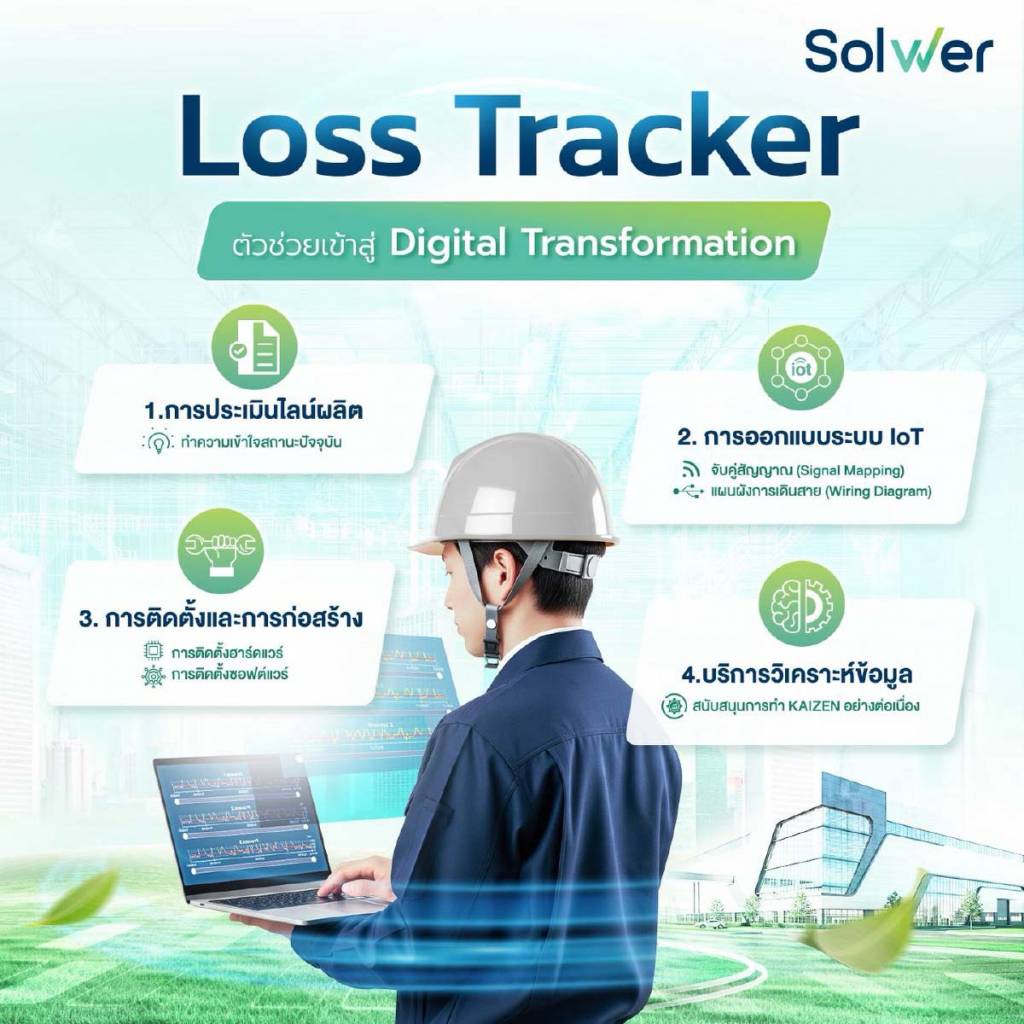
Key Capabilities of Loss Tracker
Loss Tracker is a tool that helps businesses, especially SMEs, with Digital Transformation by turning hard-to-capture, unmeasurable problems and losses into clear “digital data” for actual business improvement. It operates through 4 simple and effective steps:
Step 1: Record Loss at the Point of Occurrence
- Principle: When a loss occurs in a work process, such as a machine stopping or waiting for materials, on-site employees can start recording immediately.
- Method: Instead of manual logging or wasting time, employees use a tablet or smartphone to scan the QR code at the machine or station, entering real-world (Analog) data into the digital system from the start.
Step 2: Select and Identify the Type of Loss
- Principle: After scanning, the system displays a pre-set list of “loss causes”.
- Method: Employees can easily select the cause of the problem, such as “machine failure” or “waiting for materials”. This standardizes data, ensuring everyone in the organization uses the same definitions, eliminating ambiguity.
Step 3: Automatically Collect Data into the System
- Principle: Once the employee identifies the cause, the system does the rest automatically.
- Method: Loss Tracker automatically records key data like start time, end time, total duration, and cause into a central database (Cloud/Server). This reduces employee burden and ensures data accuracy.
Step 4: Display and Analyze Data for Improvement
- Principle: The heart of Digital Transformation is using collected data for maximum benefit.
- Method: Loss data is displayed on a Dashboard using easy-to-understand charts, like pie charts showing problem proportions or Pareto Charts that highlight the most significant causes (the 20% of problems causing 80% of the impact). This allows managers to quickly see the overall situation and make Data-Driven Decisions for precise and effective process improvement.
How Does Loss Tracker Help SMEs?
For SMEs wanting to increase efficiency with limited resources, Loss Tracker is an ideal tool that helps in various key dimensions:
1. Turn Invisible Problems into Tangible Ones
SMEs often face “Hidden Losses” that were never recorded, like employees waiting 5 minutes for materials. These small losses combined over a year have massive value. Loss Tracker turns this into tangible numbers and charts.
2. Decide Based on Real Data, Not Feeling
SME owners no longer need to guess. They can use Pareto chart data to decide immediately where to invest in improvements for the most positive impact.
3. Systematically Reduce Machine Downtime
Knowing the real, frequent causes of stops allows for root-cause fixes. For example, if waiting for materials is the main issue, the stock and disbursement system can be improved, increasing production time and overall efficiency (OEE).
4. Easily Start Kaizen and IoT
For SMEs wanting to start continuous improvement (Kaizen) or use IoT, Loss Tracker is an easy starting point with low investment and fast results, helping build a data-driven culture.
5. Directly Increase Efficiency and Profit
Ultimately, reducing wasted time in production means producing more with the same resources, directly leading to lower unit costs and increased profit.
Don’t let invisible “Hidden Loss” hold back your business growth. The most effective start to solving a problem is seeing and measuring it clearly. Loss Tracker is the most important first step for your SME to transform intangible waste into actionable insights.
Contact Slower for more consultation on the right Loss Tracker solution for your business, or start easily by [downloading the free Loss Tracker template] to try recording and seeing losses in your organization immediately!
into Productivity
industrial experts.