Deciphering the "Lean and Clean" Concept: Why "Trimming the Fat" Must Come Before Saving the World?
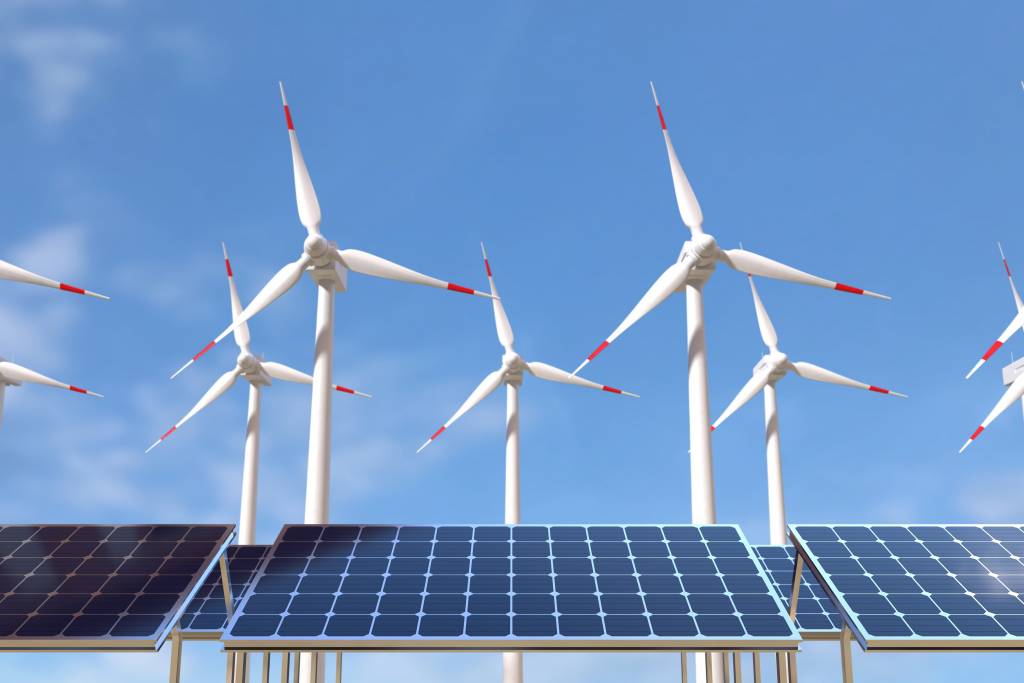
In an era where sustainability has become a strategic priority for the industrial sector, many organizations are accelerating toward Net Zero goals through clean energy investments, such as installing Solar Rooftops, purchasing renewable electricity, or acquiring Renewable Energy Certificates (RECs).
You May Also Like

However, a common misconception is that “decarbonization” solely equates to changing energy sources. If production processes remain inefficient and riddled with waste, switching to clean energy merely directs high-value resources toward sustaining existing operational flaws.
True sustainability begins not with green technology adoption, but by making production processes “Lean.” In this article, Solwer deciphers the “Lean and Clean” concept and explores why “trimming the fat” from your operations is the critical first step before transitioning to clean energy and achieving long-term sustainability.
When "Saving the World" Starts at the Wrong Point
Many factories prioritize immediate clean energy investments to reduce greenhouse gas emissions, yet they neglect a fundamental question:
Is all the energy currently being consumed truly necessary?
Installing solar power systems in a factory with high energy loss is akin to filling a leaking tank with clean water. While the source of the energy becomes cleaner, overall consumption remains unnecessarily high.
According to the International Energy Agency (IEA), improving energy efficiency is one of the most cost-effective methods to reduce greenhouse gas emissions and should be implemented in parallel with the transition to clean energy.
Clean Energy Does Not Solve Waste
Transitioning from fossil fuels to renewable energy changes the energy “source,” but it does not address the “volume” of energy consumed.
If machinery continues to run while idle, if processes remain redundant, or if waste continues to be generated,
Operational expenses will remain high.
McKinsey & Company notes that operational efficiency improvements often yield faster financial returns than renewable energy investments in the initial stages.
Lean is "Trimming the Fat" from Processes
Lean is often misunderstood as merely a cost-cutting or workforce-reduction measure. In reality, it is a management philosophy focused on creating “maximum value” for customers using the fewest possible resources.
The core of Lean is to critically evaluate every process step:
“Does this truly create value for the customer?”
If the answer is “No,” that step represents waste that must be eliminated, improved, or redesigned.
This “trimming the fat” approach streamlines operations, making them leaner, more agile, and more resilient.
Solwer emphasizes that Lean Automation is not simply about replacing labor with machines, but about optimizing processes first, then strategically applying technology to achieve sustainable results. To learn how leading organizations successfully implement Automation, download the Solwer e-Book today.
The Three Enemies of Efficiency
The foundation of Lean lies in eliminating the root causes of inefficiency, known as the “3M”:
Muda (Waste)
These are activities that consume resources without adding value to the customer—including waiting, unnecessary transport, overproduction, defects, or excessive inventory. These activities drain time, energy, and capital.
Mura (Unevenness)
This refers to fluctuations in the production process, such as varying work volumes, unbalanced cycle times, or inconsistent output. This unevenness creates bottlenecks and wastes capacity.
Muri (Overburden)
This involves straining machinery, personnel, or systems beyond their capacity—such as running machines without maintenance downtime or overworking employees. The result is higher error rates, rapid wear and tear, and increased maintenance costs.
Lean Reduces More Than Just Costs
Systematically eliminating Muda, Mura, and Muri extends beyond cost reduction to drive resource efficiency:
- Lowered energy consumption by minimizing idle machinery.
- Reduced material waste from defects and overproduction.
- Improved production lead times through optimized workflow.
- Alleviated workloads for both personnel and equipment.
Lean serves as the foundation for both productivity and sustainability.
Lean is the Starting Point for the Factory of the Future
Many factories invest in Automation systems, AI, or smart technologies, hoping for an immediate efficiency boost. However, if the underlying process is inefficient, these technologies may simply accelerate the generation of waste.
Excellent technology requires excellent processes. This is why Lean is the critical prerequisite before advancing toward Smart Factory, Green Factory, or Industry 4.0 transitions.
Why Lean Must Come Before Clean
Investing in clean energy is essential for organizational sustainability, but executives should address a critical question first:
“Is all the energy we currently use truly necessary?”
The answer to this question initiates the “Lean Before Clean” strategy.
1. The Best Energy is the Energy You Don't Use
Lean focuses on eliminating waste—be it waiting, overproduction, or idle machinery. When this waste is removed, energy demand decreases at the source, offering immediate savings without additional investment.
When this waste is eliminated, energy demand decreases immediately at the source, without additional investment.
This is the primary reason organizations should always start with Lean: reducing energy consumption is the most effective way to cut carbon emissions.
2. "Clean" Alone May Not Be the Answer
A common misconception is equating decarbonization with clean energy investment.
Many organizations rush to install Solar Rooftops or purchase RECs, hoping for rapid emission reductions.
If production processes remain laden with Hidden Waste, this investment merely changes the energy source, not the volume consumed.
The factory continues to use the same amount of energy and experiences the same level of loss, simply switching from conventional to green electricity.
3. Using Clean Energy with Non-Lean Processes = Over-Investment
Efficiency neglect often leads to unnecessarily high investments, such as:
- Excessively large Solar Rooftop installations.
- High initial investment costs.
- Increased maintenance expenses.
- Longer payback periods.
- Reduced Return on Investment (ROI).
Simply put, hidden waste may be forcing you to invest more than you should.
4. The More Lean, the More Worthwhile "Clean" Becomes
By reducing Hidden Waste, energy demand decreases, allowing for:
The consequences are:
- Smaller, appropriately sized Solar Rooftop systems are required.
- Lower initial investment costs.
- Lower maintenance expenses.
- Shorter payback periods.
- Higher Return on Investment.
The leaner the factory, the more valuable the investment in clean energy becomes.
5. Lean Before Clean is the Foundation of Net Zero
Leading global organizations prioritize energy efficiency before renewable investment to optimize economic and environmental outcomes. Lean reduces energy demand, and Clean makes the remaining energy sustainable.
Lean helps reduce unnecessary energy.
When both work together, organizations achieve lower costs, higher profits, and genuine sustainability. Ultimately, the cleanest energy is the energy that never needed to be used in the first place.
Lean Before Clean: Eliminate Waste Before Reducing Carbon
The heart of Lean is eliminating MUDA—waste hidden in every process step. Every unit of Muda represents wasted energy and unnecessary CO₂ emissions.
Common examples include:
- Overproduction leads to excess inventory and energy use.
- Unnecessary material transport.
- Bottlenecks between production stages.
- Oversized machinery for the required tasks.
- Redundant process steps.
Without eliminating waste, clean energy investments may fail to achieve maximum efficiency.
Sustainable Carbon Footprint reduction begins by addressing unnecessary usage at the source.
- Requiring larger machinery than needed.
- Using more energy at every stage.
- Using more factory space.
- Investing in larger Clean Energy systems than required.
Clearly, it should be “Lean First. Clean Next.” A leaner factory enables more cost-effective clean energy investments and creates true, long-term sustainability.
Lean is not just a tool for increasing production efficiency but the starting point for true carbon reduction. Sustainable Carbon Footprint reduction must begin by reducing unnecessary energy usage at the source.
Clearly, it should be “Lean First. Clean Next.” A leaner factory enables more cost-effective clean energy investments and creates true, long-term sustainability.
Lean & Clean: From Cost Reduction to Sustainable Growth
Lean & Clean is a business strategy that enhances cost-competitiveness and long-term profitability.
Short-term results emerge almost immediately after eliminating waste from the production process. Electricity bills decrease due to efficient energy use, production time is reduced, productivity increases, and maintenance burdens are lowered.
Short-term benefits include:
- Immediate reductions in electricity bills.
- Faster production lead times.
- Decreased maintenance costs.
- Increased capacity without additional investment.
In the long term, the benefits of Lean & Clean become even clearer as organizations reduce resource demand at the source.
Long-term strategic outcomes include:
- Optimized investment in machinery and energy systems.
- Sustained reduction in unit costs.
- Enhanced price and performance competitiveness.
- Better preparedness for environmental regulations.
- Enhanced organizational image regarding sustainability.
Ultimately, Lean & Clean represents a Business Transformation, not an added cost.
From waste reduction to increased profits,
from energy reduction to competitive advantage—
Lean & Clean builds long-term sustainable growth.
Hidden Waste: The Invisible Inefficiency Consuming Massive Energy
Many factories suffer from unnoticed waste that does not appear in standard cost reports but significantly impacts the Carbon Footprint.
Common examples include:
- Machinery idling during breaks.
- Compressed air leaks (a major source of industrial energy loss).
- Using equipment beyond the process requirements.
- Frequent, redundant material handling.
- Setting the temperature, pressure, or machine speed higher than the actual requirement.
“Invisible waste is often the most expensive cost.” Identifying and eliminating it is vital for energy efficiency.
More importantly, while these costs may not be explicitly separated in energy bills, they accumulate a significant Carbon Footprint that the organization may not notice.
“Invisible waste is often the most expensive cost.”
Finding and eliminating Hidden Waste is a vital starting point for Lean, Energy Efficiency, and Carbon Reduction. Every unit of energy saved represents both a cost reduction and an avoided carbon emission.
Lean & Clean: Turning Hidden Waste into Sustainable Profit
The Lean & Clean concept ensures that Lean identifies and eliminates waste, while Clean transforms the remaining necessary energy into sustainable power.
Organizations that start with Lean gain several advantages:
Common examples include:
- Immediate results in cash flow and productivity.
- Long-term business resilience and immunity to rising energy costs.
- Higher returns on clean energy investments.
If your organization aims for Net Zero, installing clean energy technology alone is insufficient. The true starting point is identifying and eliminating Hidden Waste.
In the world of Lean & Clean, energy saved today translates to profit and sustainability tomorrow. True sustainability starts by questioning existing processes to uncover hidden inefficiencies.
Lean and Clean operate systematically: Lean minimizes resource usage, and Clean ensures the remaining energy is sustainable.
Solwer believes true sustainability begins by eliminating waste. Our Lean Automation approach involves analyzing processes, identifying MUDA, and increasing efficiency before implementing Automation and clean energy. Invest wisely by optimizing your production process first.
Download the Solwer e-Book to discover how to implement these strategies and start your journey toward sustainable growth.