Skip to content Skip to footer

Deep Dive: Lean Automation in Practice — From 1/N to the Thousand-Ton Press Revolution

Deep Dive: Lean Automation in Practice — From 1/N to the Thousand-Ton Press Revolution

In the era of Smart Factories, many organizations still cling to the conventional assumption that “bigger machines equal higher production and better efficiency.” However, in the world of Lean Automation, this belief is being systematically challenged.

In this article, Solwer takes you deep into the application of the 1/N concept, demonstrating how a 3,000-ton press machine can be reduced to just 600 tons while maintaining output. We will explore the “engineering rationale and business impact” of this transformation.
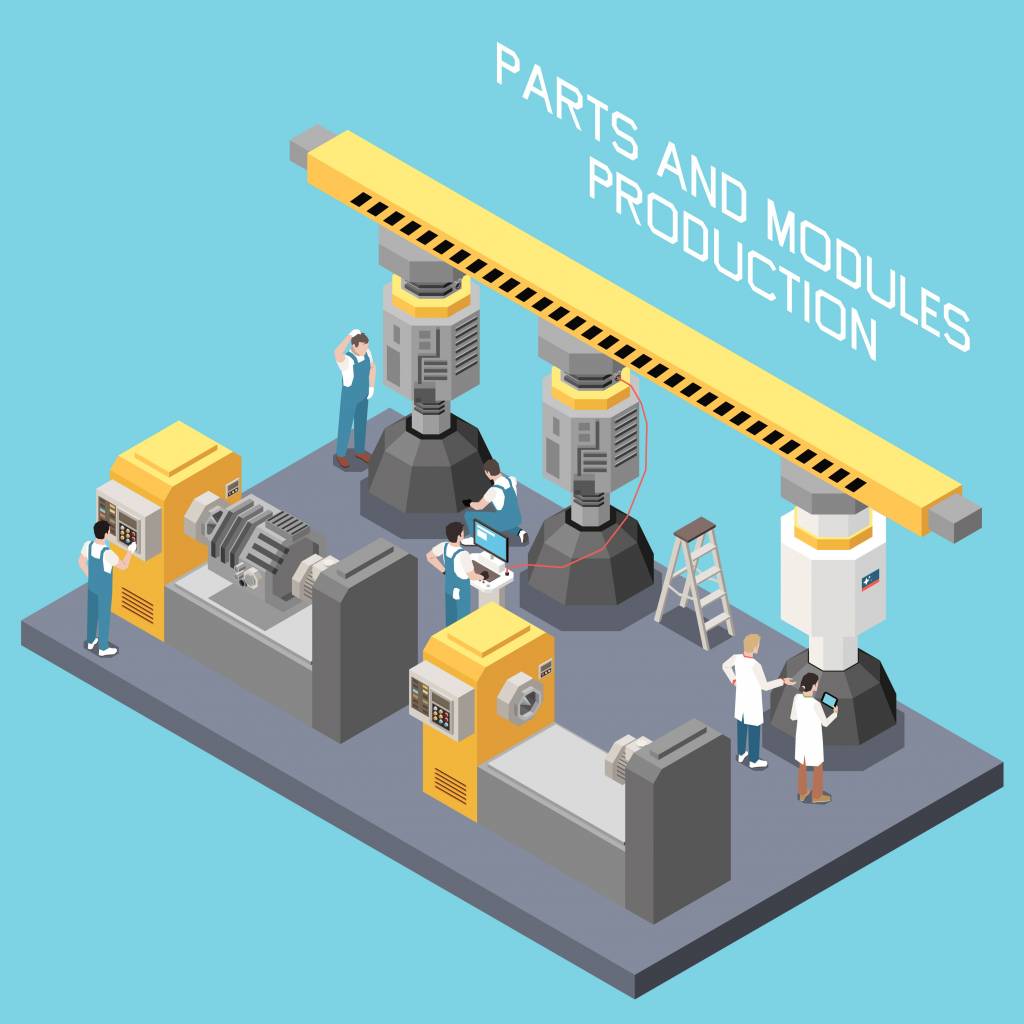

1/N Philosophy: When “Less” Becomes “More” (Less is More)

The 1/N concept is not merely a process improvement tool; it is a “systems thinking framework” that directly challenges traditional factory design.

At its heart is a simple yet powerful question: “Can we reduce total complexity (N) to leave only what truly generates value (1)?”

1. From Optimization to System Redesign

Most organizations misunderstand Lean, viewing it merely as “Optimization”—such as:

  • Reducing setup times
  • Minimizing scrap
  • Improving OEE

From a 1/N perspective, these are still just improvements within an existing system. 1/N asks:

  • Are these five steps truly necessary?
  • Why do we need three machines?
  • Are we addressing the root cause or just the symptoms?

The answer often leads to “eliminating steps” rather than “speeding them up.”

This is the difference between:

  • Optimization: Making the existing process better.
  • Redesign: Transforming the process entirely.

2. 1/N and the Foundation of Lean Thinking

The 1/N concept aligns directly with the core principles of the Toyota Production System (TPS).

TPS has two main pillars:

  1. Just-in-Time (JIT) → Produce only what is needed, when it is needed.
  2. Jidoka → Stop the line when problems occur to maintain quality.

What makes TPS truly powerful is the concept of “eliminating waste.”

3. Muda: The True Enemy of Efficiency

In Lean, we categorize waste as Muda, which includes seven main types:

  • Overproduction
  • Waiting
  • Transportation
  • Overprocessing
  • Inventory
  • Motion
  • Defects

4. 1/N = Structural Muda Elimination

The differentiator of 1/N is that it does not just “reduce waste”; it designs a new system where waste does not exist from the start.

Examples:

  • From 4 processes to 1
  • From 3 machines to 1
  • From Batch processing to One-piece Flow

This is the act of “deleting N” to leave “1.”

5. The Power of Simplification

When a system is downsized:

Complexity Reduction → Error points decrease exponentially.

Stability → Process control becomes easier.

Flow Efficiency → No bottlenecks between stages.

Hidden Cost Removal → Reduced WIP and energy loss.

6. Mindset Shift: The Hardest Part of 1/N

The biggest obstacle is not technology, but “conventional wisdom”—such as:

  • Bigger is safer
  • More steps equal easier control
  • Having a lot of buffers is good

In reality, these are “buffers of system ignorance.” 1/N forces us to return to understanding the “physics of the process” truly.

part modules factory production

Case Study: Reducing a 3,000-Ton Press to 600 Tons

This case study is not about mechanically “shrinking” a machine; it is about completely redefining the “Metal Forming Equation,” from required force to material flow dynamics within the die. The starting point: Redefining “Actual Force.”

The Beginning: Not just reducing the machine, but asking new questions about “Actual Force.”

The project to reduce a press from 3,000 tons to 600 tons did not start with a goal to “shrink the machine.” It started by asking the most fundamental question of the metal forming process.

That question was: “How much force do we actually need, and how can we make it lower?”

When the question changed, the entire mindset changed immediately. Instead of “machines must be big for safety,” it shifted to looking at the “physics of the process” to see where the actual force is and what hidden waste exists.

Key Steps in System Transformation

Starting from the question of “Actual Force,” the engineering team broke the analysis into four approaches, focusing on reducing force requirements at the source rather than merely increasing machine capacity.

1. Analyze Actual Forming Load

Measurements and simulations (Simulation + Empirical Test) revealed that the “Effective Load” was significantly lower than the machine’s capacity.

1. Analyze Actual Forming Load

Measurements and simulations (Simulation + Empirical Test) revealed that the “Effective Load” was significantly lower than the machine’s capacity.

Force Loss Mechanism

  1. Structural Loss: Some force never reaches the workpiece, used instead for:
  • Press Frame stretching
  • Elastic deformation of the structure
  • Vibration absorption
  1. Overdesign for Safety Margin: Presses are often designed to:
  • Handle worst-case scenarios
  • Allow for material variation
  • Allow for tooling wear

Resulting in “excessive capacity” locked in the system.

  1. Friction & Inefficiency in the System

Force loss occurs due to:

  • Friction between the workpiece and die
  • Non-optimal lubrication systems
  • Non-linear force transmission

2. Advanced Material Flow Engineering

When understanding that “force isn’t lost, but used incorrectly,” the team shifted from “adding force” → to “controlling material flow.”

This is what made the reduction from 3,000 tons → 600 tons actually possible.

Core Concept: Change Force Problem → Flow Problem

Instead of “pushing through,” shift to “designing material flow along the desired path.”

Techniques used

  1. Draw Bead Design

Helps control sheet metal flow (Sheet Metal Flow Control):

  • Reduces wrinkling
  • Controls tension distribution
  1. Progressive Forming

Instead of heavy single-stage hits → change to “continuous multi-step flow.”

Results:

  • Reduces peak load
  • Reduces shock load
  1. Lubrication Optimization: Adjusting:
  • Coefficient of friction
  • Lubricant type
  • Application method

Significantly reduces resistance between the material and the die.

3. Single Shot Integration

One of the most critical breakthroughs was “re-architecting the production structure” to complete everything in one step, rather than letting the part travel through multiple machines as before.

In traditional production, the forming process was clearly separated, with each stage running on different machines, leading to unnecessary complexity and waste.

Previously, the process was divided into:

  • Trim (cutting workpiece edges)
  • Pierce (hole punching)
  • Bend (folding)

Operating across 3-4 machines caused transport movement, waiting times, and increased risks of tolerance stack-up with each part transfer.

From a Lean perspective, this creates “Waste” in many forms, including Transportation, Waiting, and Overprocessing—all hidden costs that don’t add value.


New Strategy: Die Integration Strategy

Combine everything in a: “Single Die + Single Stroke Execution.”

Engineering Impact

  1. Reduced Handling Error

No part transfer between machines → reduced human + mechanical error.

  1. Reduced Tolerance Stack-up: When all processes share the same reference:
  • Cumulative error is eliminated.
  • Dimensional accuracy is significantly improved.
  1. Increased Process Stability: Due to reduced process variables.

4. Compact Machine Layout

When the load is reduced and processes are merged, the final step is “designing the new machine according to the new physics.”

Design Principles

  1. Reduced Travel Distance

Less movement → lower error opportunities.

  1. Reduced System Inertia

Lighter structures → more precise acceleration/stopping → reduced dynamic energy loss.

  1. Increased Stiffness per Unit Size: Even if the machine is smaller, it must be:
  • More rigid than before
  • Less deformation than before

Systemic Results

  • Machine footprint reduced
  • Maintenance reduced
  • Energy consumption per cycle was reduced

Business Results

When the entire system is redesigned based on “Actual Required Force,” not “Safety Margin Force,” changes occur across multiple dimensions simultaneously.

  • Machine size reduced by ~80% from 3,000 tons to 600 tons.
  • Energy consumption was significantly lowered due to reduced peak load and idle loss.
  • Workpiece quality is more stable by reducing errors from moving across multi-step processes.
  • Factory layout is more compact, making production flow continuous and highly efficient.

Reducing size isn’t just “making the machine smaller,” but “making the actual force requirement smaller.” When the core force is understood correctly, everything from machinery to energy and layout can be redesigned for simultaneous high efficiency.

Business Impact Summary

industry 4.0

Unlocking the Supply Chain: Removing Hidden Bottlenecks

When factories shift from Mass Machine concepts using large, separate stations to Compact Cell concepts that finish the process in one place, what truly changes is the “nature of the Flow.”

In traditional factories, most problems aren’t just the machine, but the “flow of work” getting stuck between stages, creating Hidden Bottlenecks that accumulate costs in time, energy, and storage space.

When switching to Compact Cell, the system works more continuously, reducing wait stops and significantly cutting Work-in-Process (WIP) accumulation.

1. Reducing WIP (Work-in-Process Inventory)

One of the most visible changes is reducing WIP, a key metric of production system efficiency.

In traditional systems, factories often look like this:

  • Parts are produced in batches (Batch Production)
  • Accumulation occurs between each step
  • Waiting for the full count before sending to the next step

Resulting in “piles of parts waiting for production,” which adds storage, control, and tracking burdens without adding value.

When changing to Compact Cell, the concept shifts from “production in piles” → to “One-piece Flow.”

What happens:

  • No work accumulation between steps
  • Work flows continuously through the system
  • Drastically reduced storage space between processes
  • Quality problems are found faster as they aren’t hidden in piles

2. Reducing Lead Time

Another important result of changing the Flow is reducing the Lead Time.

In traditional systems, Lead Time is often unnecessarily long due to:

  • Waiting at each machine
  • Batch grouping and lot waiting
  • Time-consuming transport between departments

When changing to Compact Cell and One-piece Flow:

  • No waiting for accumulation
  • All steps connected continuously
  • Waiting Time has been significantly reduced

Systemic Results:

  • Faster response to demand: Respond to customers faster.
  • Reduced Bullwhip Effect: Reduced order swing in the Supply Chain.
  • Increased system flexibility when demand changes.

3. Lowering Transportation Waste

Transportation is one of the most overlooked wastes in traditional factories.

In traditional systems:

  • Parts moved by Forklift
  • Large pallets are used for transport
  • Needs staging space between machines

None of this adds value, but increases time, damage risk, and internal logistic costs.

  • Time
  • Damage risks
  • Internal logistics costs

When changing to Compact Cell:

From “Forklift + Pallet + Batch Movement” → to “Continuous One-piece Flow”

What happens:

  • Reduced part travel distance
  • Reduced human + mechanical handling
  • Reduced damage opportunity during transit

4. Energy per Unit Lowered

While machines are smaller, the important part is the “Energy Usage Pattern” changing fundamentally.

Energy reduction isn’t just from machine power, but from reducing “Energy Waste” in the system.

What disappears in a Compact Cell system:

  • Idle Loss: Machines don’t wait for workpieces or batches.
  • Start-stop Loss: Reduced repeated acceleration and stopping.
  • Material Handling Energy: Reduced energy from transportation.

Energy Results:

  • Energy per Unit significantly reduced.
  • More consistent Load Stability.
  • Machine efficiency improved without increasing machine power.

The shift from Mass Machine to Compact Cell is not just “machine size reduction” but “changing the nature of Flow throughout the Supply Chain,” impacting WIP, Lead Time, Transport, and Energy all at once.

Lean Before Clean: The Accurate Solar Rooftop Formula

In an era prioritizing Clean Energy and carbon reduction, many factories rush to install Solar Rooftops. But a frequent mistake is “investing before understanding the actual system.”

Many choose Solar without first optimizing internal energy efficiency, resulting in designs based on “artificial demand,” not “actual demand.”

Common Mistakes

“Installing Solar before Optimizing the Factory”

While it looks sustainable, engineering and financial problems arise:

  • Overinvestment: Oversized installation.
  • Longer ROI: Payback time extends because generation doesn’t match optimized loads.
  • Inflexible System Design: Energy systems locked to unoptimized demand.

The Correct Steps: Lean Before Clean

The correct approach is not “clean energy first” but “efficient energy system first.”

Step 1: Lean Transformation (Reducing Actual Demand)

First, reduce energy demand from the “source” through process improvement:

  • Reducing oversized machines
  • Adjusting Flow to One-piece Flow
  • Reducing Idle time and WIP
  • Reducing transport and redundant processes

When Lean is applied, “Energy Demand” reduces naturally by design, not by force.

Step 2: Measure Actual Energy Demand

After the system is Leaned, measure the “actual energy usage,” not the old estimates.

This step provides data like:

  • Actual Load profile
  • Reduced Peak demand after Lean
  • Actual Energy per unit

This is the “Truth Base” for designing clean energy systems.

Step 3: Design Solar to “Fit” the Actual System

With the actual demand known, design the Solar Rooftop to fit perfectly.

Key concepts:

  • Solar size must match post-Lean load, not the old load.
  • Designed to maximize self-consumption, not oversupply.
  • Calculate ROI from optimized demand.

Financial Impact

Results change clearly when done in the correct order:

  • Lower CapEx Solar: No need to oversize the system.
  • Shorter Payback Period: Maximized efficiency usage.
  • Higher IRR: The system operates near its optimal point.

Ultimately, this project proves that modern factory design does not separate “Efficiency” from “Sustainability.” When an organization understands the true physics of its processes, it can create a system that is smaller, faster, more flexible, and sustainable. This is the heart of Lean Automation.

Leave a comment

Metric Before After
Machine Size 3,000 Tons 600 Tons
Energy Very high Significantly reduced
Process steps Multi-step Single Shot
Defect rate Higher Lower