Skip to content Skip to footer

Checklist: 10 Warning Signs Your Factory is Facing “Hidden Loss”

Checklist: 10 Warning Signs Your Factory is Facing "Hidden Loss"

In manufacturing, major breakdowns and massive scrap are easy to spot. But the real profit killers are the “minor losses” that happen every day under the radar. This is what we call Hidden Loss.

The danger isn’t just that it exists—it’s that what is invisible cannot be measured, and what isn’t measured cannot be improved. Left unchecked, these silent leaks will slowly erode your factory’s efficiency and bottom line.

In this article, Solwer breaks down exactly what Hidden Loss is, provides a 10-point checklist to help you audit your floor, and shares proven strategies to stop the leaks before they escalate.

Hidden Loss คืออะไร?

Hidden Loss refers to production inefficiencies that aren’t captured in standard downtime or scrap reports. While they don’t show up on paper, they happen in real-time on the shop floor, silently eroding your Productivity, Costs, and OEE.
The danger of Hidden Loss isn’t a catastrophic, all-day breakdown. Instead, it’s a series of “micro-losses”—minor, repetitive glitches that accumulate into hours of lost production time without anyone noticing.
Put simply: “Hidden Loss is the time and efficiency you’re losing, without knowing exactly where it’s leaking.”

Key Characteristics of Hidden Loss

  • Off the Radar: It isn’t recorded in official reporting systems.

  • Normalized: It’s often mistaken for “just a normal part of the job.”

  • Frequent but Brief: Occurs often, but each instance is too short to trigger an alarm.

  • Cumulative Impact: Small leaks that lead to massive long-term losses.


Hidden Loss vs. Downtime: What’s the Difference?

Solwer’s Breakdown OEE:

  • Performance Loss = Speed gaps.
  • Quality Loss = Hidden defects.
  • Minor Stop = Micro-stoppages.

Examples of Hidden Loss in Action

1. Unrecorded Micro-Stoppages (Minor Stops)

A machine pauses for just 10–20 seconds due to a minor jam or a brief sensor error. If this happens 200 times a day, you’ve quietly lost nearly an hour of production. Yet, the daily report still proudly claims: “Zero Major Downtime.”

2. Reduced Cycle Speeds (Performance Loss)

Your standard operating procedure (SOP) says 100 units per hour, but the floor only hits 92. Why? Operators have to manually nudge or adjust parts every cycle. The machine is “running,” but your actual capacity is bleeding out without a single alarm being triggered.

3. Unnecessary Movement (Waste of Motion)

Whether it’s walking to grab tools or digging through disorganized bins, losing just 5–10 seconds per cycle adds up. When repeated hundreds of times a day, these tiny movements turn into massive time leaks.

4. Off-the-Record Fixes (Hidden Rework)

Parts that require a “quick fix” or minor manual adjustment before moving down the line often go unrecorded as scrap or rework. This creates a false sense of quality, making your performance data look much better than it actually is.

5. Startup Inefficiency (Startup Loss)

After a changeover, it might take 3–4 trial runs to hit standard quality. This “stabilization period” is rarely logged as official downtime, yet it directly eats into your actual production time.

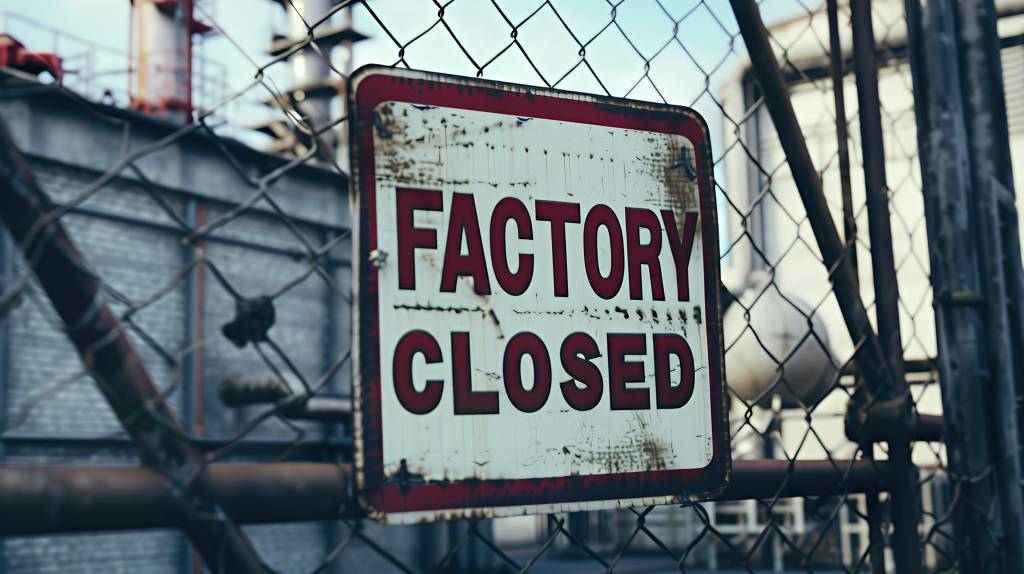
ป้ายโรงงานปิด

10 Warning Signs Your Factory is Bleeding "Hidden Loss"

Hidden Loss consists of inefficiencies that aren’t clearly captured in major reports like “Main Downtime,” yet they continuously erode your Productivity and OEE. If your factory shows any of the following signs, you are likely facing “invisible costs” without even realizing it. Identifying these red flags early is the first step toward timely and effective resolution.

1. OEE Fails to Meet Targets (Despite Zero Major Downtime)

if your machines aren’t suffering from major breakdowns or long stoppages, yet your OEE remains below standard, you likely have “Performance Loss” or “Minor Stops” lurking in the background. Whether it’s unrecorded micro-stoppages or running machines below their rated speed, these losses are subtle but devastating to your long-term output.

2. Output Below Standard with No Clear Cause

If output is consistently low despite machines “running,” you are likely bleeding efficiency through

  • Operating below the Ideal Cycle Time.
  • Manual pauses for part handling and alignment.
  • Non-value-added motion within the workflow.

These are Hidden Losses—driven by the silent bleed of “cumulative slowdowns” rather than explicit machine downtime.

3. Frequent, Unrecorded Minor Stops

Micro-stoppages lasting just 10–30 seconds—such as minor part jams, sensor faults, or material starvation. While seemingly negligible individually, when occurring hundreds of times a day, they silently compound into hours of lost capacity. Without automated data capture, these critical efficiency leaks completely vanish from manual reports.

4. Chronic, Shift-by-Shift Firefighting

If your shop-floor team is trapped in a cycle of constant manual interventions—frequent machine recalibrations, manual part realignments, or temporary quality workarounds—it exposes an unresolved, systemic Root Cause. This is not standard operation; this is daily firefighting, manifesting as a chronic Hidden Loss that bleeds your production time every single shift.

5. Severe Cycle Time Variance During Uptime

Unstable Cycle Times expose deep process inconsistencies, typically driven by:

  • Interrupted workflows.
  • Excess, non-value-added motion.
  • Material or information starvation.

Even with zero logged Downtime, this high variability destroys continuous flow and silently degrades your overall Performance.

6. Unreported Rework and Defect Accumulation

When actual scrap exceeds reported figures, it signals incomplete data capture or undocumented on-the-fly fixes. This severely underestimates your true Quality Loss and masks the real financial bleed.

7. Underestimated Startup and Changeover Losses

The Startup and Changeover phases are notorious for hidden waste, such as repetitive recalibrations and initial off-spec parts. Without real-time tracking, facilities drastically underestimate the capacity lost during these critical transitions.

8. Manual Data Entry Crippling Root-Cause Analysis

Relying on retrospective paper logs or disconnected Excel sheets guarantees incomplete and skewed data. This inaccurate reporting undermines effective loss analysis, allowing Hidden Losses to remain buried beneath compromised numbers.

9. Endless Root-Cause Debates Driven by Data Blind Spots

When production meetings rely on gut feelings and subjective experience rather than hard facts, your operation lacks true visibility into actual losses. This data blindness results in delayed decision-making and superficial fixes that completely miss the real bottleneck.

10. Stagnant Productivity Despite Increased Headcount and Overtime

Throwing more labor or costly overtime at the floor without a proportional increase in output proves the issue isn’t manpower. The true culprits are systemic Hidden Losses—such as Waste of Motion, Speed Loss, and chronic Minor Stops—that remain completely unaddressed in your workflow.

Strategies to Eliminate Hidden Loss in Production Lines

Eradicating Hidden Loss requires more than reactive firefighting. Because these inefficiencies are deeply embedded in process micro-details, the first step is transforming “invisible waste” into hard, measurable data. This sets the foundation for systemic Lean and Continuous Improvement initiatives. Below is the framework to effectively neutralize these hidden drains on your capacity.

1. Uncover Hidden Loss with Precision Data Capture

The absolute first step is establishing Data Visibility. You cannot optimize what you cannot see. Facilities relying on manual paper logs inevitably miss micro-events like Minor Stops and Cycle Time variances, allowing massive Hidden Losses to slip through the cracks of daily reporting.

Deploying Digital Manufacturing solutions—such as automated Loss Tracking and IoT Monitoring—enables the granular capture of:

  • Step-by-step Cycle Times.
  • Real-time equipment status.
  • Precise downtime events.
  • Actual production output.

This continuous data stream provides your team with the unfiltered reality of your shop-floor inefficiencies.

2. Systematic Loss Analysis via the 16 TPM Framework

Applying the 16 TPM framework exposes that core inefficiencies are categorized by key resources: Manpower, Equipment, Energy, and Material. The critical bleed stems heavily from Manpower (60%) and Equipment (40%).

On the Manpower front, major drains include Management Loss, Line Organization Loss, and Measurement & Adjustment Loss—highlighting severe gaps in administrative oversight, shop-floor execution, and process precision.

Simultaneously, primary Equipment Losses are driven by Breakdowns, Setup & Adjustments, Startup phases, and Minor Stops & Idling. These directly sabotage machine efficiency and continuous flow.

The strategic takeaway: Sustained loss reduction demands a dual-threat approach—optimizing human and process management while aggressively engineering Machine Stability to achieve ultimate TPM excellence.

3. Pinpointing Bottlenecks via Cycle Time Analysis

Hidden Losses typically manifest as prolonged or erratic Cycle Times, fatally disrupting the continuous flow of production.

Granular Cycle Time analysis provides absolute clarity on:

  • Which specific stages exceed standardized benchmarks.
  • The exact location of the production bottleneck.
  • Where non-value-added waiting or excessive motion occurs.

The Compound Effect: If an assembly step is standardized at 30 seconds but averages 36 seconds on the floor, that 6-second variance might seem trivial. However, when multiplied by thousands of cycles per day, it silently hemorrhages massive production capacity.

4. Eliminate Variance Through Standard Work

Establishing Standard Work is a critical Lean mandate to aggressively engineer out process variance. Standard Work strictly dictates:

  • The precise, optimized operational sequence.
  • The exact target execution times.
  • The optimal ergonomic placement of tools and materials.

Forcing uniform execution across all operators eradicates the waste caused by individual work habits. This locks in baseline efficiency and guarantees highly stable Cycle Times.

5. Drive Continuous Improvement via Kaizen

Hidden Losses are rarely eradicated in a single sweep; they demand a relentless, ongoing cycle of continuous improvement. The core engine for this is the PDCA loop:

  • Plan: Analyze live data to isolate inefficiencies and engineer countermeasures.
  • Do: Rapidly deploy and test the solution on the actual shop floor.
  • Check: Validate the impact against hard, real-time performance metrics.
  • Act: Institutionalize successful upgrades as the new global Standard Work.

Fueling Kaizen with actual production data completely eliminates guesswork, ensuring surgical precision in your process upgrades. Master the mechanics of Continuous Improvement—download Solwer’s free Kaizen e-book today!

6. Empower Decision-Making with Digital Production Monitoring

Forward-thinking facilities are rapidly deploying automated Production Monitoring Systems and Loss Trackers to aggressively monitor manufacturing waste in real time. These digital ecosystems deliver:

  • Live OEE Visualization: Streaming real-time performance metrics directly from the shop floor.
  • Automated Pareto Analysis: Instantly prioritizing the most critical financial bleeds.
  • Root-Cause Identification: Pinpointing the exact drivers behind Downtime and chronic Minor Stops.
  • Strategic Decision Support: Fueling continuous improvement initiatives with unassailable facts.

Armed with absolute data precision, eliminating Hidden Loss permanently shifts from reactive guesswork to relentlessly proactive, Data-Driven Execution.

Waste of Motion

Eradicating Hidden Loss with Solwer Solutions

When your operation exhibits symptoms of Hidden Loss—sub-optimal machine speeds, chronic micro-stops, or repetitive rework—the only viable next step is systematic, data-driven eradication. Relying on intuition or historical guesswork is no longer acceptable.

Industry leaders are pivoting to Smart Factory Solutions to capture and analyze production data in real time. Solwer’s digital ecosystem is purpose-built to illuminate and permanently eliminate the invisible waste bleeding your manufacturing processes.

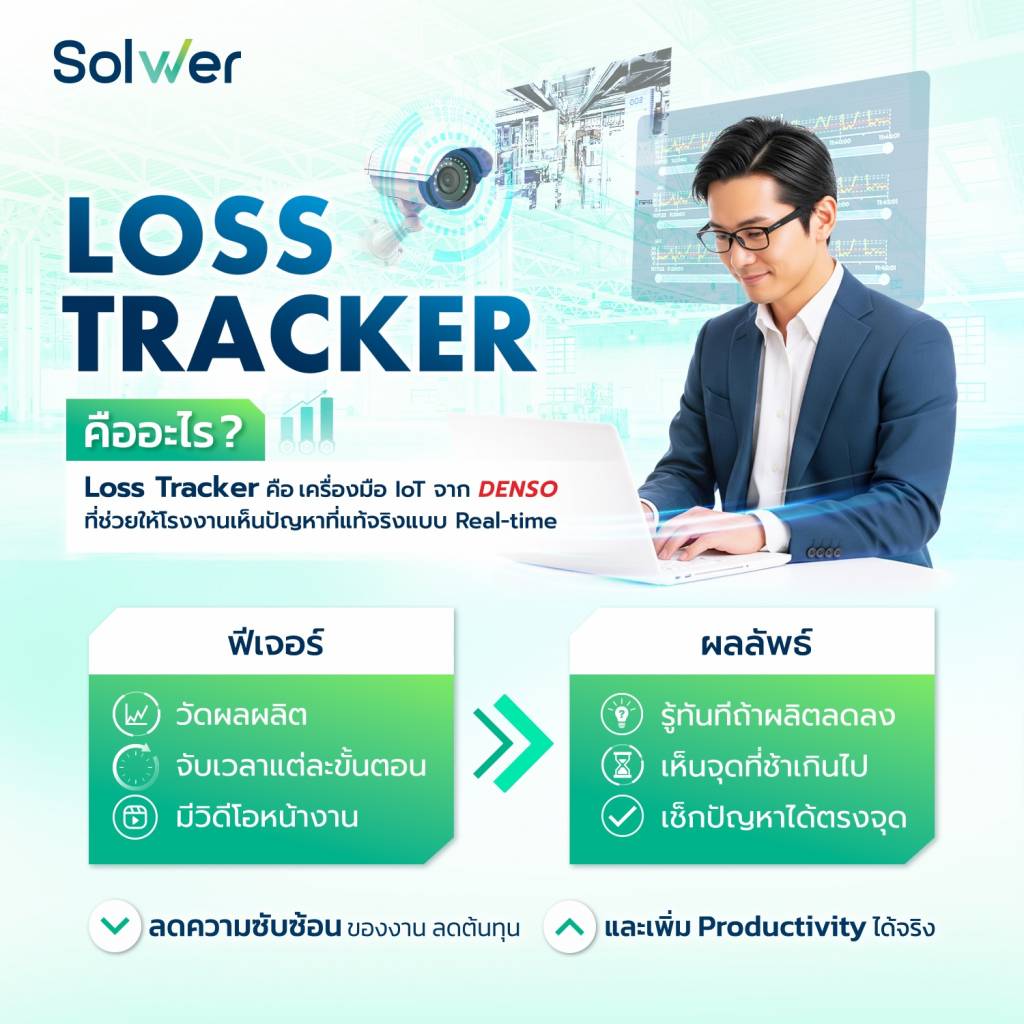
1. Expose Hidden Loss in Real Time with Loss Tracker

The fundamental danger of Hidden Loss is operational blindness. When production data relies on manual entry or post-shift reporting, critical events vanish, leaving you with incomplete and skewed performance metrics.

Solwer’s Loss Tracker obliterates this blind spot. By integrating directly with your machines and shop-floor sensors, it automatically captures mission-critical data:

  • Live, step-by-step Cycle Times.
  • Unrecorded Minor Stoppages and idling.
  • Speed Losses (operating below standard rates).
  • Defect accumulation and Rework volumes.

This granular data streams directly into a real-time Visual Dashboard. Management and shop-floor teams gain instantaneous visibility into the exact location, timing, and frequency of every loss event. The ultimate result? The absolute capability to pinpoint your true bottlenecks and execute highly targeted, high-impact process improvements.

2. Drive Root Cause Analysis with Actionable Data Insights

The majority of Hidden Losses are not massive, catastrophic failures. They are a relentless accumulation of micro-inefficiencies—such as 1-to-2-minute stops repeated dozens of times a day, or machines running fractionally below their engineered baseline speeds.

Solwer Solutions aggressively dissects these hidden metrics through automated reporting and dynamic prioritization:

  • Automated Pareto Charts: Instantly isolating the highest-impact financial bleeds.
  • Target vs. Actual Variance: Live tracking of output performance gaps.
  • Categorized Loss Analytics: Accurately attributing waste to Machine, Manpower, or Material.

This level of intelligence empowers your team to ruthlessly prioritize the most critical bottlenecks—the absolute foundation of effective Continuous Improvement and Lean manufacturing.

3. Accelerate Kaizen Initiatives with Pinpoint Accuracy

Traditional Kaizen cycles are notoriously sluggish, dragged down by manual time studies and clipboard data collection that are both labor-intensive and inherently flawed.

By deploying Solwer Solutions for automated, real-time data capture, your operational teams are empowered to:

  • Rapidly diagnose systemic failures without manual data crunching.
  • Execute purely Data-Driven Decisions.
  • Completely eradicate guesswork and trial-and-error troubleshooting.

The result: Process improvements are engineered and deployed with unprecedented speed, surgical precision, and sustainable continuity.

4. Unlock True Hidden Capacity

Many facilities attempt to scale production through massive Capital Expenditure (CapEx) on new machinery. In reality, immense untapped capacity is already buried within your existing workflows, suppressed by Hidden Losses. By systematically identifying and neutralizing these drains—eliminating Minor Stoppages, restoring baseline machine speeds, and slashing scrap and rework—you instantly unlock maximum Output with zero additional capital investment. This directly drives down operational costs and exponentially boosts long-term profitability.

Hidden Losses are insidious. They bleed your production in micro-increments, remaining virtually invisible to standard observation. Over time, these cumulative leaks devastate overall efficiency, inflate costs, and sabotage production targets. If your facility is battling unexplained performance drops, it is time to audit your operations. Use the following Checklist to expose whether Hidden Losses are secretly compromising your production lines.

The ultimate challenge with Hidden Loss is visibility; traditional, manual reporting systems completely fail to measure it. This is where a digital Loss Tracker becomes an indispensable operational weapon. By automating machine and process data capture, it analyzes actual factory-floor waste and translates it into clear, actionable intelligence. It equips your organization to surgically pinpoint Hidden Losses and architect systematic efficiency upgrades.

Download Solwer’s FREE e-book today to master the Loss Tracker ecosystem—the definitive tool to permanently eradicate Hidden Loss from your manufacturing lines!

Leave a comment

Downtime Hidden Loss
Clear Halt Partial Halt
Instantly Visible Embedded
Fully Logged Under-reported
Short-term Impact Long-term Drain