


How to Reduce MP Costs Through Digital Transformation
MP (Manpower) cost is one of the primary expenses for any factory, directly impacting profitability. In an era of fierce competition and continuously rising labor costs, organizations must find ways to “reduce costs without compromising efficiency.”
You May Also Like


The approach chosen by leading organizations is Digital Transformation (DX), which transitions operations from people-dependent systems to ones driven by data and technology. Today, Solwer will take you on a journey to understand Digital Transformation.
Pain Points of Traditional MP Cost Management
Many organizations continue to face the limitations of legacy systems that unnecessarily drive up MP costs, such as:
- Excessive Manual Work: Employees spend their time recording data, generating reports, or filling out Excel spreadsheets, which does not directly create value.
- Human Dependency on Repetitive Tasks: Multiple roles perform the exact same routines repeatedly, such as consolidating data or submitting reports.
- Lack of Real-Time Data: This results in delayed decision-making and the inability to resolve issues in a timely manner.
- Treating the Symptoms: Deploying personnel to resolve immediate issues instead of fixing the Process.
The result is that the organization has “enough people,” but “efficiency does not increase.”
What is Digital Transformation (DX), and how does it relate to reducing MP costs?
Digital Transformation (DX) is the integration of digital technology to “elevate the entire operational system.” It is not just about changing tools, but rather reshaping the organization’s mindset, processes, and decision-making to be Data-driven and powered by Automation.
In the manufacturing context, DX often involves leveraging technologies such as IoT (Internet of Things), Automation, AI (Artificial Intelligence), and Data Analytics to integrate data from the shopfloor into management systems. This makes every process transparent, traceable, and capable of continuous improvement.
The Key Transformations DX Brings to the Organization
DX is not just about “adding technology,” but rather transforming the way we work across 3 key dimensions:
1. From Manual → Automation
Originally, many processes heavily relied on human labor, such as manual data recording, report generation, or physical shopfloor inspections. DX steps in to enable:
- The system can automatically capture and process data.
- Reduced repetitive tasks.
- Reduced manpower requirements for routine work.
The result is reduced workload for employees and lowered MP costs without impacting efficiency.
2. From Experience → Data-Driven
In the past, decision-making often relied on experience or guesswork. However, DX enables organizations to:
- Use real data from machinery
- Analyze production trends and behaviors
- Make decisions based on accurate data
This helps reduce decision-making errors and lowers costs resulting from solving problems at the wrong root cause.
3. Reactive → Proactive
However, DX enables organizations to:
- Detect problems from the early stages
- Use Real-Time Monitoring to reduce Downtime
- Anticipate problems in advance (Predictive)
This makes it possible to prevent losses before they actually happen.
How DX Helps Reduce MP Costs
MP costs increase when an organization:
- Allocates manpower to non-value-added tasks
- Spends excessive time on manual work
- Repeatedly fixes symptoms without addressing the root cause
DX directly addresses these pain points through:
- Reducing manual work → Replacing it with automation
- Increasing productivity per person → Leveraging data to drive decision-making
- Eliminating waste → Gaining clearer visibility into problems
- Minimizing errors → Utilizing systems instead of relying solely on humans
The ultimate result is “achieving more with the same headcount” or “reducing manpower in non-essential areas” without ever compromising on total output.
Business Outcomes of DX Implementation
According to industry studies, organizations that implement DX can:
- Significantly reduce operational costs (Operational Cost)
- Increase Productivity through Automation
- Reduce Downtime with Real-Time Monitoring
- Enhance the accuracy and speed of decision-making
All of these outcomes directly contribute to reducing MP costs and boosting the organization’s long-term competitiveness.

Practical Approaches to Reducing MP Costs with DX
Reducing MP (Manpower) costs through Digital Transformation (DX) is not a straightforward “headcount reduction.” Instead, it is about “reducing unnecessary workloads” and “maximizing efficiency per person” by systematically utilizing technology to optimize work processes.
The following approaches are practical methods that organizations can implement to achieve clear, measurable business outcomes.
1. Shift from Manual to Digital Data Collection
One of the primary root causes of high MP costs is that operators must spend time on manual data collection and management, such as on-site manual logging, filling out Excel sheets, or compiling end-of-shift reports. These tasks:
- Are time-consuming
- Do not generate direct value
- And have a high potential for human error
Implementing digital systems, such as IoT or Machine Data Collection, will completely revolutionize the way you work. The system can:
- Automatically capture data from machines
- Log data continuously 24/7
- Display results in real-time
The resulting outcomes include:
- Significantly reducing time spent on reporting
- Minimizing data logging errors
- Obtaining much more granular and accurate data
Most importantly, employees do not have to waste time on paperwork and can instead focus on value-added tasks, such as analyzing and improving the production process.
2. These types of tasks are perfectly suited for automation
Examples of automation applications:
- Automated report generation systems using on-site data
- Notification systems when machines encounter problems
- Real-time dashboard update systems
The resulting outcomes:
- Reduce the number of people needed for routine work
- Increase operational speed from hours → to minutes
- Minimize mistakes from human error
- Operate continuously without needing to add shifts
The key takeaway is that automation does not just “replace people,” but it empowers them to move toward higher-value work.
3. Using Data to Increase Productivity per Person
One of the key goals of DX is enabling organizations to “visualize losses” that occur within operational processes.
With real-time data, organizations can identify:
- Where the bottlenecks that slow down production are
- When high Waiting Time occurs
- How much Idle Time machines have
This data helps teams to:
- Lean out processes
- Reduce non-value-added time
- Increase output without adding headcount
When “wasted time” is reduced → productivity per person automatically increases.
This is the most sustainable way to reduce MP costs, because it does not require cutting staff, but rather makes people work more efficiently.
4. Reduce Downtime with Real-Time Monitoring
Downtime, or machine standstill time, is one of the hidden costs that directly affects MP because:
- Employees are still present, but cannot produce work.
- It requires additional personnel to resolve the issues.
- It impacts the overall production plan.
A Real-Time Monitoring system allows you to:
- Detect problems immediately as they occur.
- Receive automatic notifications.
- Analyze the root causes of problems faster.
Furthermore, it can also:
- Prevent recurring issues.
- Reduce Mean Time to Repair (MTTR).
- Increase machine availability.
The results are:
- Reduced downtime losses.
- More efficient use of personnel.
- Reduced unit costs in the long term.
5. Standardize Processes to Reduce Human Dependency
Another cause of high MP costs is “inconsistent work performance,” which depends on individual skills or experience.
DX helps solve this problem by creating Standardization through digital systems, such as:
- Well-defined workflows
- Digital work instructions
- Automated control and tracking systems
What the organization gains:
- Reduced work errors
- Minimized variance between employees
- Reduced time for training new staff
- Consistent work quality
When processes are standardized:
→ The organization can use fewer people
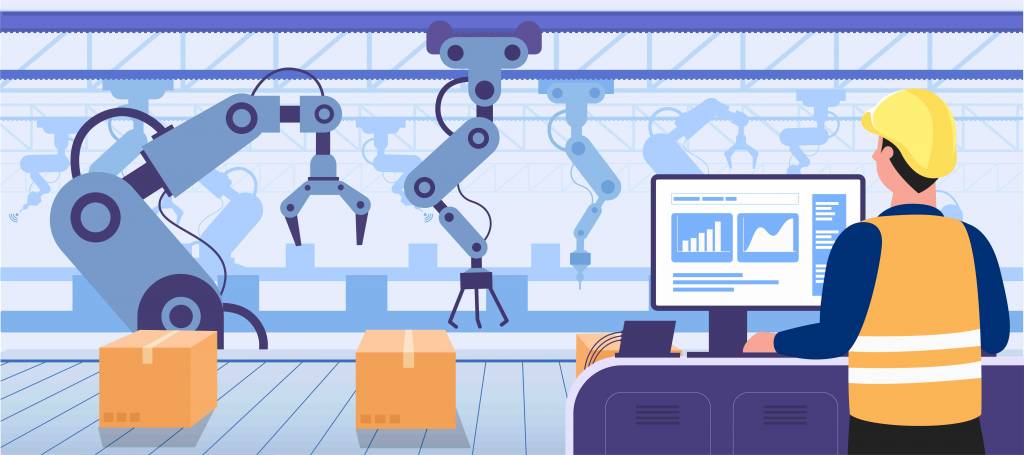
Reduce Manual Work with Automation: The Key to Reducing MP Costs
In many organizations, high MP (Manpower) costs are not caused by “having too many people,” but rather because employees must spend time on repetitive and non-value-added manual tasks, such as report generation, data entry, work status tracking, or traditional coordination.
Automation has thus become a crucial tool for solving this problem as it shifts the working pattern from “humans doing repetitive work” to “systems doing the work instead,” allowing organizations to reduce workload, cut costs, and increase efficiency simultaneously. If you want to know how leading organizations use Automation for real results, along with starting guidelines that you can apply immediately in your factory, download Solwer’s e-Book now!
1. Eliminate Repetitive Tasks
Many tasks in an organization are repetitive, such as:
- Data collection and report generation
- Work status updates
- Basic data verification
Automation can take over these tasks effectively by:
- Automatically pulling data from multiple sources
- Processing and formatting reports instantly
- Updating data in real-time
The results are:
- Reducing working time from “hours” to “minutes.”
- Reducing the need for manpower in routine work
- Increasing overall process speed
2. Reduce Human Error and Increase Data Accuracy
Manual work is prone to errors, such as:
- Incorrect data entry
- Forgetting to log data
- Using outdated information
Automation helps reduce these risks because:
- The system operates according to defined logic
- It does not suffer from fatigue or exhaustion
- It can automatically verify data accuracy
When data becomes more accurate:
→ Analysis and decision-making improve accordingly
→ Costs resulting from error correction are reduced
3. Continuous 24/7 Operation Without Additional Headcount
One of the limitations of human labor is “time” and “continuity.”
However, automation can operate around the clock without restrictions, such as:
- Real-time data updates
- 24-hour data processing
- Immediate notifications when anomalies occur
This enables:
- No need for additional night shifts
- Reduced reliance on employees during difficult-to-manage periods
- Increased continuity of the production process
4. Increase Productivity While Maintaining Headcount
When automation takes over routine tasks, employees can shift their focus to higher-value work, such as:
- Data Analysis
- Process Improvement
- Kaizen and waste reduction
The results are:
- Increased output per person
- Improved work quality
- The organization can grow without needing to increase headcount
5. Automation is Not Just About “Reducing Headcount,” but “Empowering Human Potential”
The important thing to understand is that automation is not aimed at replacing all humans, but to:
- Reduce unnecessary workloads
- Utilize human potential for more important work
- Create a balance between “people” and “technology.”
Organizations that use automation correctly will be able to:
- Sustainably reduce MP costs
- Increase system-wide efficiency
- And create long-term competitive advantages
Use Case Examples: Using Technology to Reduce MP in Factories
Reducing MP costs through Digital Transformation doesn’t always have to start with a massive project. Organizations can begin with “Quick Win” Use Cases that focus on reducing manual tasks and increasing efficiency at points that directly impact costs.
Below are use cases that factories can practically implement to achieve clear results in the short to medium term.
1. Using IoT Instead of Manual Machine Logging (Machine Data Collection)
Original Pain Point:
Employees must record data such as machine operating hours, number of pieces, or machine status (Run/Stop) on paper or in Excel, which:
- Is very time-consuming
- Is not real-time data
- Has a high potential for error
DX Approach:
Install IoT systems or Machine Data Collection to pull data directly and automatically from machines.
What Changes:
- Data is collected in real-time 24/7
- No need for manual recording
- Obtain granular and accurate information
Result:
- Reduced operator workload
- Reduced human error
- Increased speed of analysis and decision-making
2. Using Dashboards Instead of Excel Reports
Original Pain Point:
Employees spend several hours each day:
- Collecting data
- Creating Excel reports
- Sending reports to management
DX Approach:
Using dashboards connected to a real-time database.
What Changes:
- Data is updated automatically
- Management can access data immediately
- No need to wait for end-of-day reports
Results:
- Significantly reduced time spent on reporting
- Reduced manpower required for reporting
- Increased data transparency
3. Use Alert Systems Instead of Manual On-Site Inspections
Original Pain Point:
Supervisors have to walk around to check machines periodically to see if there are problems, which:
- Is time-consuming
- May miss critical events
- Cannot inspect all points simultaneously
DX Approach:
Use Alert systems that notify you when anomalies occur, such as:
- Machine stoppage
- Speed reduction
- Downtime occurrence
What Changes:
- Immediate real-time notification system
- Supervisors do not need to walk around constantly
- Ability to focus only on problematic areas
Results:
- Reduced inspection time
- Reduced downtime
- Increased capacity to oversee multiple production lines
4. Using Automation for Planning and Task Tracking
Original Pain Point:
Planning production and tracking tasks traditionally require human labor:
- Constantly updating status
- Coordinating across multiple departments
- Adjusting plans when problems arise
DX Approach:
Use an Automation or Workflow System to:
- Automatically plan production
- Update job status in real-time
- Send alerts when delays occur
What Changes:
- Reduces manual coordination work
- Simplifies processes
- Increases planning accuracy
Results:
- Reduces the number of people needed to track tasks
- Increases response speed
- Reduces planning errors
Overall Outcomes of Using DX to Reduce MP Costs
When organizations begin to integrate these use cases, clear results can be observed across several dimensions:
- Significantly reduce manual work time: Employees no longer waste time on repetitive tasks or report generation.
- Reduce headcount for routine tasks: Manpower can be reallocated to higher-value operations.
- Increase decision-making speed: Real-time data enables immediate problem resolution.
- Increase productivity per person: Achieve higher output with the same headcount.

How to Measure Results? Key KPIs to Track
Implementing Digital Transformation (DX) to reduce MP costs cannot be clearly evaluated without defining appropriate Key Performance Indicators (KPIs). These changes reflect not just a headcount reduction, but an improvement in overall organizational efficiency. Therefore, organizations need to track KPIs that measure both production efficiency and manpower utilization simultaneously.
1. OEE (Overall Equipment Effectiveness)
OEE is a primary manufacturing KPI used to measure machine effectiveness, consisting of 3 components:
- Availability
- Performance
- Quality
- Relation to MP: When DX helps reduce downtime, speed losses, and defects, OEE increases directly.
- What it reflects: Machines are utilized more effectively; higher output is achieved without adding staff; total unit costs decrease.
2. Productivity per Headcount (Output per Headcount)
This KPI measures “how much output one employee can produce,” for example:
- Number of units produced per person
- Revenue per employee
- Output per labor hour
Relation to DX:
When Automation and Data are integrated to assist:
- Manual work decreases
- Personnel can accomplish more within the same amount of time
What it reflects:
- Labor efficiency increases
- The organization can grow without increasing headcount
3. Downtime (Machine Stoppage Time)
Downtime is the period when machinery cannot produce, which directly impacts:
- Productivity
- Labor costs (personnel are present but cannot produce)
Relation to DX:
Real-Time Monitoring and Alert systems enable:
- Faster problem detection
- Reduced machine downtime
- Prevention of recurring issues
What it reflects:
- More efficient personnel utilization
- Reduction of wasted time in the system
4. Cycle Time
Cycle Time is the time taken to produce one unit of product from start to finish.
Relation to DX:
- Automation helps eliminate unnecessary steps
- Data helps reduce bottlenecks
What it reflects:
- Faster production processes
- Reduced labor requirement per unit
- Increased production capacity without adding headcount
5. Labor Cost per Unit
This is the KPI that directly “reflects the end result” of MP cost reduction.
Calculated from:
Total labor cost ÷ Total units produced
Relation to DX:
- If output increases while labor costs remain stable → Cost per Unit will decrease
What it reflects:
- Cost-effectiveness of labor utilization
- Overall system efficiency
Why KPIs should be viewed holistically, not in isolation
Crucially, these KPIs should not be viewed separately as they are interconnected, for example:
- Higher OEE → Higher Productivity per person
- Reduced Downtime → Better Cycle Time
- High Productivity → Lower Labor Cost per Unit
Viewing KPIs holistically helps to:
- See the overview of the entire system
- Understand the actual impact of DX
- Identify areas for improvement more accurately
Shift from Cost Reduction to Productivity Improvement with Digital Transformation
In the era of Digital Transformation (DX), reducing MP costs no longer means “reducing headcount,” but rather “increasing human potential” so that people can create more output with existing resources.
The core of DX is shifting the mindset from Cost Reduction toward Productivity Improvement, where the organization focuses on:
- Reduction of non-value-added tasks
- Using Automation to replace repetitive and manual work
- Leveraging Data to drive decisions and process improvements
- Elevating the entire operational system for accuracy, speed, and transparency
When an organization successfully transitions, the result is not just “lower costs,” but:
- Sustainable cost reduction without impacting growth
- Significant increase in Productivity per person
- Stronger long-term competitive advantage
Ultimately, DX is not just a cost-cutting tool, but a “strategy for organizational elevation” that enables efficient growth in the modern industrial world. Download Solwer’s e-Book to learn more and start transforming your organization with data today.

into Productivity
industrial experts.
References: