


HoRenSo: How to Use the Japanese Communication Principle to Achieve Results in the IoT Production Line
In the new era of manufacturing, where data flows faster than ever, a slight delay or error in communication can unknowingly lead to losses on the production line. Many factories already have IoT systems and large amounts of data, but the question is: is this data truly being communicated and utilized effectively?
You May Also Like
Solwer will introduce you to the HoRenSo concept, a Japanese communication principle that can be powerfully applied to the IoT production line. When reporting (Houkoku), informing (Renraku), and consulting (Soudan) are connected with real-time production status data, problem-solving decisions become faster, more transparent, and more accurate.
What is HoRenSo?
HoRenSo is an organizational communication concept considered to be the “key to Japanese work culture.” The term is an abbreviation of three Japanese words: Hōkoku, Renraku, and Sōdan, which together form the fundamental principle of internal corporate communication to ensure work efficiency, smoothness, and shared understanding across all levels of the team.
The Meaning of HoRenSo — Houkoku, Renraku, Soudan
Houkoku (Report)
Houkoku means reporting the status, results, or progress of work regularly to supervisors or those concerned, whether it’s positive progress or an emerging problem. Unlike Western communication styles, which often allow employees to make their own decisions, this type of reporting helps management “stay in the loop” with every work movement.
Renraku ( Inform / Communicate)
Renraku is informing all relevant parties about any information or changes that might affect the work of others. This can include both vertical communication (subordinate to superior) and horizontal communication (between departments or colleagues), ensuring that all parties coordinate correctly and on time.
Soudan (Consult)
Soudan is consulting when facing a problem, question, or situation that requires input before making a decision. This means that decisions are not made by individuals alone, but through collective brainstorming to find the best solution, which helps improve work quality and reduce errors.
Why is HoRenSo the Heart of Japanese Work Culture?
In the context of Japanese work culture, HoRenSo communication is not just a theoretical concept but a “practice deeply embedded in the work system” of many Japanese organizations, playing the following crucial roles:
1. Creates Data Transparency
Continuous reporting and informing ensure that everyone in the organization receives accurate and timely information, eliminating omissions or guesswork in their work.
2. Strengthens Team Collaboration
HoRenSo promotes communication at all levels, from managers to employees, allowing everyone to participate and understand the overall picture of the work, which supports the principle of wa or “harmony,” the core of Japanese culture.
3. Reduces Errors and Accelerates Problem Solving
By reporting and consulting before taking action, problem-solving occurs faster and problems are not hidden until they become a crisis. This allows the organization to manage unexpected situations without delay.
4. Systematically Cultivates Good Communication Habits
Employees starting work at a Japanese company are trained from the beginning to use HoRenSo as part of their daily work life, making it a “fundamental habit” of working.
Communication Issues in Traditional Production Lines That HoRenSo Cannot Fully Solve
Although HoRenSo is a communication system central to Japanese work culture, when used in traditional production lines that rely solely on human reporting, there are still many limitations that hinder complete communication and affect production efficiency.
1. Delayed Information
Traditional HoRenSo reporting often occurs after the event, for instance, an employee reports a fault or problem several hours or production cycles after it happened, preventing management and the team from solving the problem in a timely manner.
2. Inaccuracy and Misinterpretation
Human communication carries risks of inaccuracy, such as:
- Incomplete data reporting
- Forgetting important details of the event
- Differences in interpretation between the sender and receiver of the information
The result is that decisions often do not align with the actual situation on the floor.
3. Incomplete Data for Decision-Making
Traditional HoRenSo focuses on reporting, consulting, and informing, but cannot capture numerical details or recurring events, such as:
- Actual time lost per production cycle
- Frequency of minor stop problems
- Recurring patterns of defects
This causes managers or improvement teams to make decisions based on incomplete data, or rely on memory and assumptions instead of measurable, actual data.
Although HoRenSo helps foster discipline in communication and collaboration, in complex and fast-paced production lines, relying solely on human reporting still has limitations concerning delay, inaccuracy, and incomplete data, thus failing to support real-time decision-making or Continuous Improvement that demands high accuracy.
When HoRenSo Must Adapt in the Digital and Smart Factory Era
In the era of Smart Factories and rapidly changing manufacturing, relying on traditional HoRenSo, where employees report manually and consult face-to-face, is no longer sufficient. The limitations of the old methods cannot meet the complexity and speed of modern production processes.
1. Complexity of Modern Production Lines
Automated machinery, IoT systems, and multi-stage production lines generate a large volume of data and multiple simultaneous events. Traditional HoRenSo reporting may not keep pace with events, leading to delayed information and sometimes incomplete data.
2. Real-time Changes
Modern manufacturing changes rapidly, such as changes in production formulas, batch changes, or sudden machine shutdowns. If relying on traditional reporting and consultation, the information may reach management or the improvement team too late, leading to untimely decisions and reduced efficiency of Continuous Improvement.
3. Communication and Decisions Must Be Accurate and Verifiable
Traditional HoRenSo relies on the accuracy of human communication, which risks inaccuracy and misinterpretation. In the digital factory era, incorrect or incomplete data can lead to wrong decisions and losses.
HoRenSo remains a crucial communication principle, but in the era of Digital Transformation and Smart Factory, it must adapt by integrating digital technologies such as Video Recording, Real-time Data, IoT, and Dashboards. This ensures that reporting, consulting, and informing happen immediately, accurately, and completely, meeting the demands of real-time operation, reducing errors, and genuinely supporting Continuous Improvement.
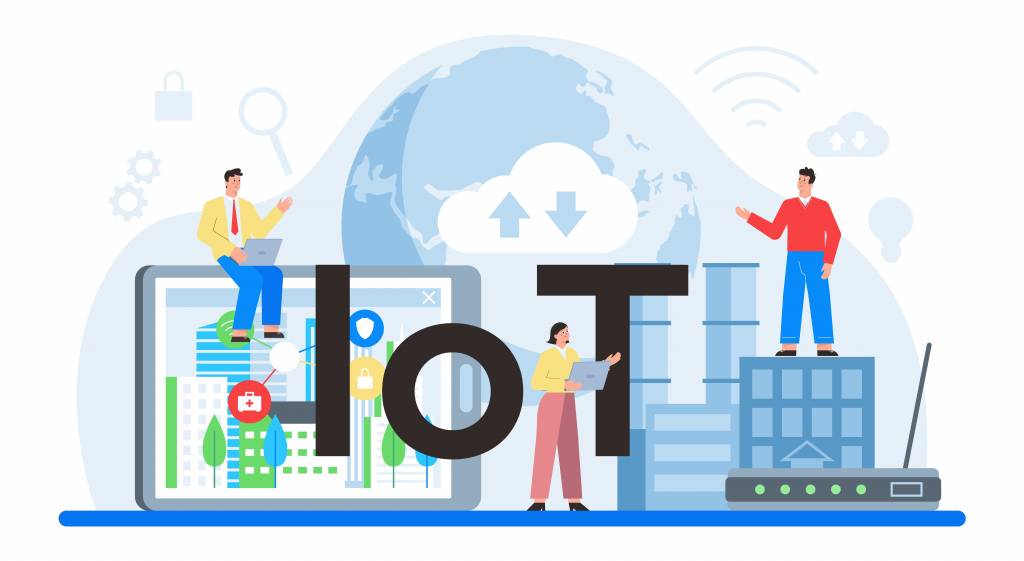
The Role of IoT in Transforming “Reporting” into Real-time Data
In the era of the Smart Factory, fast and accurate decision-making is essential for Continuous Improvement and KAIZEN. However, traditional reporting processes, which rely on human observation and reporting, often face limitations such as delayed, incomplete, or inaccurate data, leading to untimely problem-solving and slow Continuous Improvement.
Here, IoT (Internet of Things) plays a crucial role in changing how data is reported from human input to verifiable, real-time data. By installing sensors and IoT devices on machinery and production lines, the system can automatically transmit various status data immediately, such as:
1. Real-time Production Status Reporting
- Machines can transmit operational status data, such as running, stopped, or standby.
- Production cycle data (Cycle Time, Throughput, Yield) is transmitted to the central dashboard system without waiting for employee reports.
- This allows the team to instantly monitor production efficiency and quickly address emerging problems.
2. Detecting Damage or Abnormal Events
- IoT sensors detect abnormal events such as sudden machine shutdowns, high vibration, abnormal temperature, or material shortages.
- The system can record the event’s timestamp and send an alert to the relevant team immediately.
- This data ensures accurate problem-solving because managers and improvement teams see the actual event with the correct context.
3. Creating a Database for Continuous Analysis
- Data from IoT is continuously collected, allowing for analysis of trends, patterns, or recurring problems.
- This increases the accuracy of Root Cause Analysis and helps the PDCA Loop spin faster.
- This real-time data can be linked with on-site video, allowing simultaneous viewing of the event’s visual context and numerical data.
IoT transforms human reporting, which has limitations in terms of time, accuracy, and completeness, into instantly verifiable real-time data. This helps factories respond to problems faster, analyze production results more accurately, and build a Continuous Improvement system based on factual data, not memory or assumptions.
The integration of IoT + Digital HoRenSo + on-site video is thus the key that enables digital-era factories to operate efficiently, reduce losses, and genuinely support KAIZEN.
The New Era of Houkoku: From Human Reporting to Reporting with Real Data
In the traditional HoRenSo system, Houkoku means reporting progress, results, or problems to the manager or relevant parties. However, as production becomes more complex and faster, relying solely on human reporting often leads to delayed, incomplete, or inaccurate data.
The new era of Houkoku thus transforms human reporting into automatic reporting via IoT systems.
- Machines automatically transmit data on operational status, production cycle (Cycle Time), and losses.
- Data is collected and processed on a centralized system, making it transparent and traceable.
- Managers and improvement teams see the same data in real-time, reducing reliance on memory or manual reports.
The result is that Houkoku becomes real data that is verifiable and can be used for immediate decision-making.
Renraku Without Omissions: When Everyone Sees the Same Data Set
Renraku is informing or communicating data to all relevant parties, which in the past could lead to omissions or inaccuracies, such as:
- Incomplete data transmission
- Receiver misunderstanding the sender
- Delayed information, preventing timely problem solving
With a Centralized System + IoT, Renraku communication is adapted so that all parties see the same data set in real-time.
- Machine status, loss, and production cycle data are instantly forwarded to all parties.
- Reduces errors from communication or differing interpretations.
- All parties can monitor the production status and work progress simultaneously.
The result is that Renraku is accurate, timely, and complete, supporting effective collaboration.
Faster Soudan: Decisions Based on Data, Not Feelings
Soudan is a consultation and discussion to solve problems. Past decisions often relied on the experience or feelings of those in authority, which could lead to prolonged arguments or incorrect problem solving.
In the digital era, Soudan uses actual data from IoT as its foundation.
- The improvement team can view Cycle Time, Downtime, Minor Stop, and Loss Event in real-time.
- Numerical evidence, along with on-site video, allows for accurate Root Cause Analysis.
- Consultation and decision-making thus happen quickly, reducing disputes and solving problems precisely.
The result is that Soudan becomes fast and efficient data-driven consultation, genuinely supporting Continuous Improvement.
The integration of IoT + Centralized Data + Real-time Dashboard + Video turns HoRenSo into a comprehensive real-time communication system.
| HoRenSo | Pre-Digital Era | Digital Era + IoT |
|---|---|---|
| Houkoku | Human reporting is delayed and inaccurate | Automatic reporting, transparent, traceable |
| Renraku | Data omitted, different interpretations | All parties see the same data set in real-time |
| Soudan | Consultation based on feelings | Consultation based on real data, accurate and fast decisions |
Data Transparency is the Key to HoRenSo in the IoT Era
In the era where Smart Factories and IoT play a role, HoRenSo is no longer limited to traditional reporting, informing, and consulting. Instead, “data transparency” becomes the essential core that allows HoRenSo to function at full efficiency.
1. Data Transparency = Trust in the Team and Organization
When production, machine, and loss data are collected and revealed via a centralized system for all parties to see in real-time:
- Managers can see the actual status of the production line without waiting for employee reports.
- Employees clearly see their own work results and efficiency.
The result is increased team trust because everyone operates on the same data, with no hidden or distorted information.
2. Data Transparency = Fosters Accountability
When every event and number is recorded in real-time:
- Employees know that the data is verifiable, and they can look back at the actual events.
- Work accountability increases because successes or problems are clearly visible.
This leads to work discipline and a commitment to quality improvement.
3. Data Transparency = Promotes a Culture of Collaboration
Disclosing data via Dashboards, Video, and IoT Signals allows all parties to access the same set of information.
- Reduces disputes or misunderstandings between departments.
- Ensures that consultation meetings (Soudan) are data-driven, not based on personal opinions.
- Motivates the team to collaborate and continuously improve processes (Continuous Improvement / KAIZEN).
4. Example in the Production Line
- Traditional Houkoku: Employees manually report downtime, sometimes with delayed and incomplete information.
- IoT Era Houkoku: Machine sensors automatically transmit signals to the centralized system. Employees and managers see the same data instantly.
- Result: Problems are detected faster, Root cause analysis is more accurate, and decision-making and process improvement accelerate.
Data transparency in the IoT era HoRenSo is not merely about displaying numbers or machine status; it is an essential mechanism that builds trust, accountability, and a culture of collaboration, enabling teams at all levels to work with the same data, make accurate decisions, and drive Continuous Improvement sustainably.
How HoRenSo + IoT Helps Reduce Problem-Solving Time in the Production Line
Traditional problem-solving on the production line often relies on employee observation, manual reporting, and consultation meetings, which are time-consuming and prone to errors or redundant communication. The integration of HoRenSo with IoT clearly mitigates these issues, for the following practical reasons and results:
1. Faster Response Time
- Real-time data from IoT: Sensors and IoT devices detect abnormalities such as sudden machine shutdowns (Downtime), minor stops, or defect events, and instantly transmit signals to the Dashboard.
- Automatic Notifications (Alerts): The system can immediately notify relevant teams via app, messaging systems, or control screens.
- Result: The improvement team can access the event and solve the problem immediately, instead of waiting for an employee report.
2. Minimized Downtime
- Real-time data helps the Maintenance and Production teams see the exact source of the problem right from the start. Root cause analysis is accelerated with numerical evidence and on-site video.
- Problem solving is conducted with the correct procedures, reducing machine downtime.
Practical Result: Downtime is reduced, and overall equipment effectiveness (OEE) is increased.
3. Reduced Redundant Communication
- Linking data from IoT to the centralized system and Dashboard ensures that all parties see the same data.
- There is no need for repeated questioning or multiple inquiries, unlike in traditional HoRenSo.
- Reduces inaccuracies arising from different data interpretations.
- Practical Result: Decisions become more accurate, and team collaboration is smoother.
4. Continuously Supports Continuous Improvement
- Data from IoT is stored as a database for analyzing trends and patterns of problems.
- Teams can improve processes with evidence, reducing the chances of recurrence.
- The PDCA Loop spins faster because the data is real-time and traceable.
Summary of Practical Results
| Result | Details |
|---|---|
| Faster Response | Teams access and solve problems immediately using alerts and real-time data |
| Reduced Downtime | Shorter machine stops, increased production efficiency |
| Reduced Redundant Communication | All parties see the same data set, reducing multiple inquiries |
| Accurate Continuous Improvement | Analyzing trends and root causes based on real data, reducing problem recurrence |
The Role of Digital Platforms in Connecting HoRenSo with Continuous Improvement
In the era of the Smart Factory, merely relying on the traditional HoRenSo culture—reporting, informing, and consulting by people—is insufficient for the complexity of production lines and the speed of data. Introducing a Digital Platform acts as an intermediary to effectively connect HoRenSo with Continuous Improvement, Lean, and the use of real data.
1. Connecting HoRenSo with Real-time Data
Digital platforms can gather data from multiple sources, such as:
- IoT and Machine Sensors: Automatically transmit data on operational status, Downtime, Minor Stop, Cycle Time, and Loss Events.
- On-site Video: Records the event and context of the problem.
- ERP or MES Systems: Production data and factory KPIs.
When all data is integrated and displayed on a Real-time Dashboard, reporting (Houkoku), informing (Renraku), and consulting (Soudan) occur based on actual data, reducing reliance on employee memory or interpretation.
2. Supporting Continuous Improvement and Lean
HoRenSo being connected to a digital platform ensures that every step of the PDCA Loop is fully supported by data.
- Plan: Analyze real data from IoT and the dashboard to identify problems and improvement opportunities.
- Do: Implement corrective actions based on suggestions, with real-time result recording.
- Check: Verify results using KPIs, Loss Trackers, and on-site video.
- Act: Continuously improve processes or sustainable preventive measures.
The result is continuous improvement supported by clear evidence, reduced losses, and increased production efficiency.
3. Elevating Work Culture with Digital Platforms
Integrating HoRenSo with IoT and digital systems is more than just using technology.
- Transparency: All data is verifiable, and all parties see the same status.
- Accountability: Employees know that results and problems are recorded and traceable.
- Collaboration: Reduces inaccuracies and disputes. The improvement team can make decisions based on real data.
Digital platforms, such as Solwer’s system, also help to systematically link HoRenSo with Lean and Continuous Improvement, ensuring that improvements happen quickly, accurately, and continuously.
4. From Communication Culture to the Decision-Making System of a Smart Factory
- HoRenSo + IoT data provides the factory with a decision-making system based on real data.
- Reduces problem response time, minimizes Downtime, and supports a faster-spinning PDCA Loop.
- Work transforms into a transparent and collaborative culture, rather than relying solely on person-to-person communication.
The integration of HoRenSo with digital platforms and IoT is not just about using technology; it is about elevating the organization’s entire work culture, making communication transparent, decisions accurate, and continuous improvement fast and sustainable. Work for teams at all levels is thus data-driven, reducing errors and Downtime, and genuinely driving Continuous Improvement / KAIZEN.
If you want to move forward to practical application and learn how to comprehensively link HoRenSo + IoT + Digital Dashboard, you can download Solwer’s e-book for in-depth information about Smart Factory operations and continuous improvement using real-time data immediately.

into Productivity
industrial experts.