


Challenges of Digital Transformation in Thai Factories: How to Cope?
In recent years, the concepts of Digital Transformation and Industry 4.0 have become the cornerstone of manufacturing development worldwide. Many factories have begun integrating digital technologies such as AI, IoT, Cloud Computing, and Automation systems to enhance production efficiency, reduce operational costs, and boost competitiveness in the global market.
You May Also Like


However, for factories in Thailand, the transition into the digital era has not always been a smooth journey. While many organizations recognize the necessity of this evolution, the actual implementation of technology continues to face significant hurdles—ranging from workforce skill gaps to misaligned investments that fail to hit the mark.
In this article, Solwer analyzes the primary challenges of Digital Transformation in Thai factories and offers sustainable adaptation strategies for organizations aiming to successfully transition into a Smart Factory.
What is Digital Transformation and Why Must Thai Factories Adapt?
Digital Transformation is the process of integrating digital technology into all areas of an organization’s operations to enhance efficiency, reduce costs, and build long-term competitiveness. For the manufacturing sector, this transition goes beyond simply installing automated machinery; it encompasses the use of Data Analytics to refine work processes and the interconnection of various factory systems to ensure they operate together seamlessly and effectively.
In an era of intensifying industrial competition, factories relying on traditional processes may face productivity bottlenecks, rising costs, and difficulties responding to rapid market shifts. Consequently, Digital Transformation has become a vital strategy for evolving an organization into a Smart Factory.
The Concept of Industry 4.0 and the Shift in Production
Industry 4.0 focuses on using digital technologies to create a connected production ecosystem. Technologies such as the Internet of Things (IoT), Artificial Intelligence (AI), Big Data, and Automation enable factories to collect real-time data from machinery, analyze performance, and continuously improve production processes.
Implementing Industry 4.0 allows for real-time process control, reduction of operational waste, and increased manufacturing precision—all critical factors in helping a business compete on a global scale.
Benefits of a Digital Factory / Smart Factory
Factories that embrace digital transformation can evolve into a Digital Factory or Smart Factory, offering numerous advantages:
- Increased Production Efficiency: Maximizing output with optimized resources.
- Reduced Machine Downtime: Utilizing predictive insights to prevent stoppages.
- Consistent Product Quality: Minimizing human error through automated monitoring.
- Lower Operational Costs: Streamlining processes to eliminate unnecessary expenses.
- Data-Driven Decision Making: Using accurate analytics to support business strategies.
When a factory can unify data from machinery, employees, and production processes, management becomes significantly more precise and efficient.
Overview of the Digital Factory Transition in Thailand
While many organizations in Thailand have begun prioritizing Digital Transformation, the transition is still in its early stages. A significant number of factories continue to rely on traditional workflows, such as paper-based data logging, manual production inspections, and the use of machinery that is not connected to digital systems.
However, pressure from global competition—combined with customer demands for high-quality products at competitive prices—is driving many organizations to invest in technology to enhance their production efficiency.
Current Technology Adoption Levels in Thai Factories
The level of technology adoption among Thai factories varies significantly. While some organizations have begun implementing Automation and Data Analytics to support decision-making, many others—particularly Small and Medium Enterprises (SMEs)—are still at the starting line, relying heavily on manual processes.
Transitioning to a Smart Factory remains a time-consuming journey that requires a combination of technological investment, workforce skill development, and the restructuring of internal operational processes.
Primary Challenges of Digital Transformation in Thai Factories
1. Shortage of Digital and Technical Talent
One of the most significant barriers to transitioning to a digital factory is the lack of a tech-savvy workforce. Many organizations currently lack specialists in critical areas such as:
- Data Analytics
- Artificial Intelligence (AI)
- Robotics and Automation
- Cybersecurity
- Industrial IoT
While the demand for these skilled workers is skyrocketing, the education system has yet to produce enough graduates to meet industrial needs. This results in:
- Prolonged training periods for existing staff.
- Slower adoption of new technologies.
Inflated costs for hiring specialized experts.
2. Misaligned Technological Investment
A common pitfall is investing in technology without a clear strategic roadmap. Many factories jump-start their digital transformation by purchasing high-end tech, such as:
- IoT systems
- Automated machinery
- Data analytics software
However, without a prior analysis of the actual production process, this leads to issues where:
- The technology does not align with actual workflows.
- Disparate systems fail to communicate with one another.
- Investment fails to yield tangible business results.
Consequently, organizations end up carrying high costs without achieving the expected efficiency gains.
3. Unprepared Data Infrastructure
Digital Transformation relies on Data as the foundation for analysis and decision-making. However, many factories still struggle with:
- Data is scattered across multiple, disconnected systems.
- A lack of real-time data collection systems.
- Insufficient data quality for meaningful analysis.
Research indicates that approximately 65% of manufacturing organizations in Thailand view poor data quality as a major obstacle to implementing AI and digital technologies. Without “clean” and ready data, advanced technology cannot provide its full value.
4. Budget Constraints, Especially for SMEs
Small and Medium Enterprises (SMEs) often face significant capital investment limitations. Smart Factory technologies, such as:
- Industrial robots
- AI systems
- Big Data analytics platforms
These usually require high upfront costs, causing many factories to hesitate. SMEs with limited resources often stick to traditional machinery or manual processes, resulting in a slower adaptation to Industry 4.0 compared to larger corporations.
5. Organizational Culture and Resistance to Change
Digital Transformation is not just about installing new hardware; it’s about shifting the organizational mindset and culture. Many organizations face hurdles such as:
- Employees fear that automation will replace their jobs.
- Management is not fully grasping the urgency or importance of change.
- Deeply rooted traditional work habits.
Studies on Industry 4.0 in Thailand have found that a lack of support from top-level management and a missing digital vision are among the most critical barriers to a successful organizational transition.
The Consequences of Failing to Adapt to the Digital Era
In an era where digital technology plays a pivotal role in manufacturing, factories sticking to traditional processes face severe challenges in maintaining operational efficiency and competitiveness. Failing to embrace digital transformation can negatively impact an organization across multiple dimensions—from production performance and operational costs to global market standing.
1. Declining Production Efficiency
Factories that rely on manual workflows or non-connected machinery often struggle to control and optimize production. The lack of Real-time Data Collection prevents management from tracking machine status or production progress instantaneously.
When issues arise—such as machine breakdowns, process errors, or inconsistent product quality identifying the root cause becomes time-consuming due to the lack of analytical data. This results in delayed problem-solving and frequent interruptions to the production line. Conversely, digitally integrated factories can monitor performance in real-time, allowing for rapid adjustments. Without these tools, a factory’s productivity will naturally fall behind tech-forward competitors.
2. Higher Production Costs Than Competitors
Traditional factory operations typically carry higher costs because their processes incur more waste. This includes high labor dependency, raw material loss due to manual errors, and excessive downtime.
The absence of Data Analytics prevents organizations from pinpointing exactly where waste occurs within the production cycle. This makes efficiency improvements difficult, keeping operational costs high. In contrast, digital factories utilize data for Preventive Maintenance and resource optimization, which directly reduces costs and enhances price competitiveness in the market.
3. Loss of Global Competitiveness
Today’s industrial market is globally competitive. Customers and business partners prioritize factors such as product quality, manufacturing consistency, delivery speed, and the ability to adapt to specific demands.
Factories that fail to digitize may struggle to meet these expectations, resulting in slower lead times, inconsistent quality control, and difficulty handling Mass Customization orders. In the long run, failing to keep pace with industrial technological shifts leads to lost business opportunities and the risk of being replaced by manufacturers with more advanced, agile, and modern production systems.
Therefore, adapting to Digital Transformation is no longer just an option; it is a vital strategy for maintaining a competitive edge and ensuring sustainable future growth.
Strategies for Overcoming Digital Transformation Challenges
Despite the numerous hurdles, factories can embark on their Digital Transformation journey effectively by implementing the right strategic framework.
1. Start with a Production Process Analysis
Before investing in technology, an organization should analyze its production processes to identify real pain points such as areas of high waste, time-consuming steps, or product quality issues. Understanding these problems clearly ensures that the technology chosen specifically addresses the right operational needs.
2. Develop Workforce Skills Alongside Technology
Developing employee skills is a critical factor in successful transformation. Organizations should promote digital literacy training and build internal teams with technical expertise. When employees understand the technology, they can utilize digital tools more effectively to improve their own workflows.x
3. Implement Pilot Projects to Mitigate Risk
Starting with a small-scale Pilot Project allows the organization to test new technologies in a controlled area first. Once the project proves successful, it can then be scaled to other parts of the factory. This approach reduces investment risk and allows the organization to learn from real-world experience before a full rollout.
4. Build a Data System to Support Decision-Making
Data is the heart of Digital Transformation. Organizations should develop systems to collect data from machinery and production processes for performance analysis. Having accurate, real-time data allows management to make significantly more precise and informed business decisions.
5. Foster an Organizational Culture of Innovation
Transitioning to the digital age requires support from every level of the organization. Leadership must promote a culture of continuous learning, experimentation, and innovation. When employees feel involved in the change process, the organization can adapt to new technologies in a more sustainable way.
Key Technologies Accelerating Digital Transformation in Factories
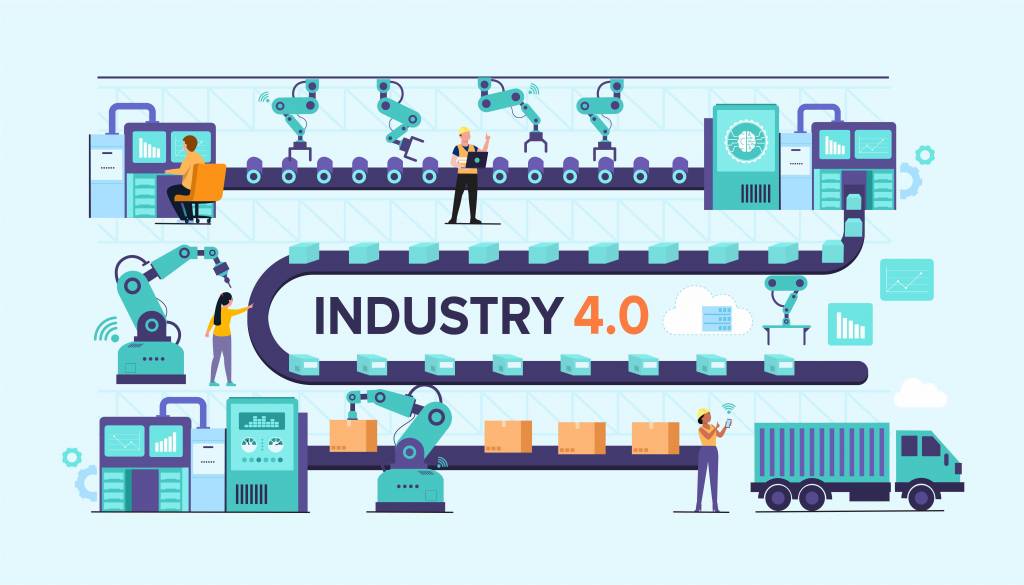
Digital Transformation in the manufacturing sector is not just about replacing machinery or software systems; it is the orchestration of multiple technologies working together to enhance production efficiency, reduce waste, and enable more precise data-driven decision-making. These technologies form the foundation of Industry 4.0 and serve as the drivers for evolving into a Smart Factory.
Today, the core technologies playing a pivotal role in accelerating the transition include the Internet of Things (IoT), Artificial Intelligence (AI), Data Analytics, and Automation, all of which make production processes smarter and more efficient.
1. IoT for Production Line Data Collection
The Internet of Things (IoT) connects machines, devices, and various systems within a factory to the internet, allowing for real-time tracking of machine performance.
In industrial settings, IoT is typically installed along production lines to gather data. This information is sent to a central system for further analysis, providing managers and engineers with a clearer overview of the entire manufacturing process. Key benefits include:
- Real-time Machine Status Monitoring: Tracking live performance.
- Reduced Downtime: Identifying issues before they cause stoppages.
- OEE Analysis: Calculating Overall Equipment Effectiveness with precision.
- Predictive Maintenance: Planning repairs based on actual machine health.
3. Automation and the Smart Factory
Automation is another cornerstone technology that reduces reliance on manual labor by using machinery or automated control systems to perform tasks. In modern factories, automation is applied across various stages, including:
- Automated Conveyor Systems: Streamlining material movement.
- Industrial Robots: Precision assembly and handling.
- Automated Machine Control: Ensuring consistent operation.
- Quality Inspection Systems: Utilizing sensors for defect detection.
When automation is integrated with IoT and data analytics, a factory evolves into a Smart Factory—an intelligent, fully connected ecosystem. Key characteristics of a Smart Factory include:
- Machine-to-Machine (M2M) Communication: Devices exchanging data autonomously.
- Adaptive Production: Systems adjusting based on real-time data inputs.
- Automated Decision-Making: Utilizing system analytics to guide operations.
- Process Flexibility: Responding rapidly to shifting market demands.
Digital Transformation is a fundamental shift in workflows, mindsets, and management styles. While challenges such as skill gaps, misaligned investments, and cultural resistance exist, a strategic approach ensures that technology creates real business value.
Successful organizations typically start by analyzing their production processes to identify core problems before selecting the right mix of IoT, AI, Data Analytics, and Automation. This ensures that technological investments are cost-effective and lead to sustainable change.
Ready to systematically transform your production? Download the Solwer E-Book to learn effective strategies, methodologies, and case studies that will help your organization transition into a Smart Factory while minimizing investment risks.

into Productivity
industrial experts.